Effective Test Preparation: 3-Month Plan for US Standardized Exams 2025

A successful 3-month effective test preparation plan for US standardized exams in 2025 involves a structured approach encompassing diagnostics, comprehensive content review, consistent practice, and strategic refinement to optimize performance.
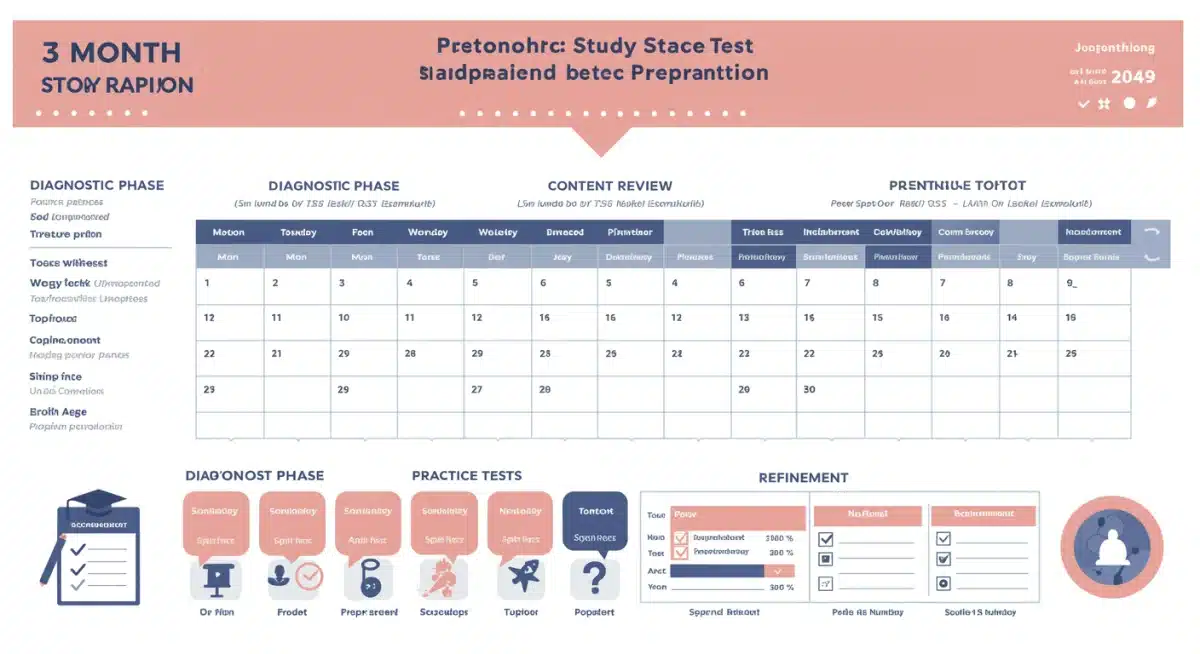
Preparing for US standardized exams in 2025 can feel overwhelming, but with a well-structured approach, you can transform anxiety into achievement. This guide outlines an effective test preparation strategy over three months, designed to help you tackle exams like the SAT, ACT, GRE, GMAT, or others, with confidence and competence. Let’s delve into how a focused, strategic plan can pave your way to success.
Understanding Your Starting Point: The Diagnostic Phase
Before embarking on any study journey, it’s crucial to understand where you currently stand. The diagnostic phase is not just about taking a practice test; it’s about gaining insights into your strengths and weaknesses, which will inform your entire preparation strategy. This initial assessment sets the foundation for a truly personalized and effective study plan.
Many students skip this critical step, eager to dive straight into content review. However, without a clear understanding of specific areas needing improvement, your study efforts might be scattered and less efficient. A diagnostic test provides a baseline score and pinpoints the exact topics and question types where you excel or struggle.
Choosing the Right Diagnostic Test
- Official Practice Tests: Always prioritize official practice tests provided by the exam administrators (e.g., College Board for SAT, ACT Inc. for ACT). These tests accurately reflect the exam format, question styles, and difficulty levels.
- Full-Length Simulations: Ensure the diagnostic test is a full-length simulation, taken under timed conditions. This helps replicate the real exam experience and gauge your stamina and time management skills.
- Detailed Score Reports: Look for tests that offer detailed score reports, breaking down performance by section, topic, and question type. This granular data is invaluable for identifying specific areas for improvement.
Once you complete your diagnostic test, dedicate time to thoroughly review every question, both correct and incorrect. Understand why you got certain questions wrong – was it a knowledge gap, a misinterpretation of the question, or a careless error? This meta-analysis is as important as the score itself.
The diagnostic phase concludes with a clear understanding of your current performance level and a prioritized list of areas that require significant attention. This data-driven approach ensures that your subsequent study efforts are targeted and impactful, making your test preparation genuinely effective.
Month 1: Building a Strong Foundation Through Content Review
With a clear understanding of your diagnostic results, the first month of your effective test preparation plan should focus on shoring up foundational knowledge. This phase is about systematic content review, filling in the identified knowledge gaps, and reinforcing concepts that are frequently tested. It’s not about rote memorization, but about deep understanding and application.
Many standardized tests assess a broad range of subjects, from mathematical principles to reading comprehension and writing skills. A comprehensive review ensures that no stone is left unturned, providing you with the necessary tools to tackle various question types.
Strategic Content Review Techniques
- Targeted Study: Based on your diagnostic report, allocate more time to subjects and topics where you performed poorly. Use textbooks, online courses, and reputable study guides.
- Active Learning: Don’t just passively read. Engage with the material by summarizing, creating flashcards, explaining concepts to others, and working through example problems.
- Spaced Repetition: Revisit challenging topics periodically to strengthen memory retention. Tools like Anki or Quizlet can be highly effective for this.
- Understanding Concepts: Focus on understanding the underlying principles rather than just memorizing formulas or facts. This allows for adaptability when facing novel questions.
For subjects like math, practice is paramount. Work through numerous problems, starting with basic concepts and gradually moving to more complex ones. For verbal sections, expand your vocabulary, practice reading critically, and analyze different types of passages. Writing sections often benefit from understanding essay structures and practicing timed essays.
By the end of the first month, you should feel more confident in your grasp of the core content. This foundational knowledge is the bedrock upon which all subsequent practice and refinement will be built, ensuring your preparation remains robust and effective.
Month 2: Intensive Practice and Strategy Development
After building a solid content foundation in Month 1, the second month of your effective test preparation shifts focus to intensive practice and strategy development. This is where you apply your knowledge, familiarize yourself with the exam’s nuances, and refine your approach to different question types. Consistent practice is the key to improving both speed and accuracy.
This month involves taking more practice tests, but with a strategic twist. Each practice session should be a learning opportunity, not just a measure of performance. It’s about understanding why certain answers are correct and others are incorrect, and adapting your strategy accordingly.

Mastering Exam Strategies
- Timed Practice Sections: Practice individual sections under strict timed conditions to build speed and endurance.
- Error Analysis: After every practice session, conduct a thorough error analysis. Categorize your mistakes (e.g., content gap, careless error, time management, misinterpretation) and devise specific strategies to address each type.
- Question Type Familiarity: Understand the different question formats and learn specific strategies for each. For example, in reading comprehension, some questions might require inference, while others ask for direct recall.
- Process of Elimination: Practice using the process of elimination effectively, especially for multiple-choice questions. This can significantly increase your chances of selecting the correct answer even if you’re unsure.
Month 2 is also an ideal time to incorporate full-length practice tests every one to two weeks. These simulations are invaluable for building stamina and identifying areas where time management might be an issue. Treat each practice test as if it were the real exam, from your morning routine to your break times. This level of simulation helps reduce test-day anxiety.
By the end of this month, you should have a firm grasp of the exam’s structure, question types, and effective strategies for tackling each section. Your confidence should be growing, and your ability to apply learned concepts under pressure should be significantly improved.
Month 3: Refinement, Review, and Mental Preparation
The final month of your effective test preparation plan is dedicated to fine-tuning your skills, consolidating knowledge, and mentally preparing for exam day. This is not the time to learn entirely new concepts but to solidify what you’ve already studied, refine your strategies, and manage any pre-exam stress.
This phase is crucial for ensuring that all your hard work over the past two months culminates in peak performance. It involves strategic review, targeted practice, and a strong focus on well-being.
Key Activities for the Final Month
- Review Weak Areas: Revisit topics identified in your error analysis that still pose challenges. Use flashcards, summary notes, and quick practice sets to reinforce these areas.
- Timed Mini-Sections: Instead of full-length tests, focus on timed mini-sections to maintain speed and accuracy without burning out.
- Strategy Drills: Practice specific strategies for tricky question types or sections where you tend to lose time.
- Mock Exams: Take one or two final full-length practice tests under exam conditions to simulate the actual day and assess your readiness.
Mental preparation is just as important as academic preparation. Practice mindfulness or relaxation techniques to manage stress. Ensure you are getting adequate sleep, maintaining a healthy diet, and incorporating physical activity into your routine. A well-rested and calm mind performs significantly better under pressure.
The week leading up to the exam should be focused on light review, not intense studying. Avoid cramming new information. Instead, focus on reviewing your summary notes, formulas, and common pitfalls. Get plenty of rest, eat nutritious meals, and visualize success. This final push, combining academic refinement with mental well-being, ensures you enter the exam room feeling fully prepared and confident.
Leveraging Resources and Tools for Optimal Study
An effective test preparation plan isn’t just about time management; it’s also about utilizing the best resources and tools available. In 2025, the landscape of educational resources is vast, offering a myriad of options from traditional textbooks to AI-powered tutors. Choosing the right tools can significantly enhance your learning experience and optimize your study efforts.
The key is to select resources that align with your learning style and address your specific needs, as identified during your diagnostic phase. A combination of different types of resources often yields the best results.
Essential Study Resources
- Official Study Guides: These are indispensable as they come directly from the test makers and offer authentic practice questions and explanations.
- Reputable Test Prep Books: Companies like Kaplan, Princeton Review, and Barron’s offer comprehensive guides with strategies, content review, and practice tests.
- Online Platforms: Websites like Khan Academy, Magoosh, and UWorld provide extensive practice questions, video lessons, and performance analytics. Many offer adaptive learning features.
- Flashcard Apps: Anki, Quizlet, and similar apps are excellent for vocabulary building and memorizing key facts through spaced repetition.
- Tutoring and Courses: For those who benefit from personalized guidance or structured learning environments, consider hiring a tutor or enrolling in an online or in-person prep course.
Beyond content-specific resources, consider tools for organization and productivity. A good planner, either digital or physical, can help you stick to your schedule. Productivity apps can minimize distractions, while note-taking apps can help organize your study materials. Utilizing a blend of these resources ensures a holistic and well-supported preparation journey, making your study time as productive as possible.
Maintaining Well-being Throughout Your Preparation
While academic rigor is essential for effective test preparation, neglecting your physical and mental well-being can undermine even the most meticulously planned study schedule. A balanced approach that prioritizes self-care alongside studying is crucial for sustained performance and preventing burnout, especially during an intensive 3-month period.
The pressure of standardized exams can be immense, leading to stress, anxiety, and fatigue. Recognizing the importance of holistic health ensures you remain sharp, focused, and resilient throughout your preparation.
Strategies for Holistic Well-being
- Adequate Sleep: Aim for 7-9 hours of quality sleep each night. Sleep plays a vital role in memory consolidation and cognitive function.
- Nutritious Diet: Fuel your brain with a balanced diet rich in fruits, vegetables, whole grains, and lean proteins. Avoid excessive sugar and caffeine, which can lead to energy crashes.
- Regular Exercise: Incorporate physical activity into your daily routine. Exercise is a powerful stress reliever and can improve focus and mood.
- Mindfulness and Breaks: Practice mindfulness techniques like meditation or deep breathing. Schedule regular short breaks during study sessions to prevent mental fatigue.
- Social Connection: Don’t isolate yourself. Maintain connections with friends and family. A strong support system can provide much-needed emotional balance.
Remember that breaks are not a luxury but a necessity. Stepping away from your study materials allows your brain to process information and recharge. Engage in hobbies or activities you enjoy to keep your spirits high. By integrating these well-being practices into your daily routine, you’ll not only enhance your learning capacity but also approach exam day with a clearer mind and greater emotional resilience, ultimately contributing to your overall effective test preparation.
| Key Phase | Objective and Duration |
|---|---|
| Diagnostic Assessment | Identify strengths and weaknesses (Week 1). |
| Content Review | Fill knowledge gaps, build foundation (Month 1). |
| Intensive Practice | Apply knowledge, refine strategies (Month 2). |
| Refinement & Well-being | Consolidate, manage stress, final review (Month 3). |
Frequently Asked Questions About Test Preparation
A diagnostic test is critically important as it provides a baseline. It helps identify your specific strengths and weaknesses, allowing you to tailor your study plan effectively. Without it, you might spend time reviewing topics you already know, making your preparation less efficient and targeted.
Absolutely. Three months is a sufficient timeframe for effective test preparation, provided you follow a structured and disciplined plan. Consistency, targeted study, and regular practice tests are key. Many students achieve significant score improvements within this period by optimizing their study methods.
Official study guides from the test makers are paramount. Supplement these with reputable test prep books (e.g., Kaplan, Princeton Review), online platforms like Khan Academy or UWorld, and flashcard apps for vocabulary. A combination of these resources often yields the best results for comprehensive preparation.
During the second month of your preparation, taking one full-length practice test every one to two weeks is highly recommended. This helps build stamina, identify time management issues, and simulate actual exam conditions. In the final month, one or two additional mock exams should suffice.
Prioritize well-being by ensuring adequate sleep, a nutritious diet, and regular exercise. Incorporate short, frequent breaks during study sessions, and practice mindfulness or relaxation techniques. Maintaining social connections and engaging in hobbies can also significantly reduce stress and prevent burnout, keeping you focused.
Conclusion
Achieving success on US standardized exams in 2025 is a goal within reach with a dedicated and strategic approach to effective test preparation. By meticulously following a 3-month plan that emphasizes diagnostic assessment, targeted content review, intensive practice, and crucial mental well-being, you can significantly enhance your performance and confidence. Remember, preparation is not just about accumulating knowledge, but about mastering strategies and maintaining a balanced lifestyle to ensure you are at your best on exam day. Embrace this journey with discipline and optimism, and your efforts will undoubtedly be rewarded.
Autor