US Treasury Bond Yields 2026: 5-Year vs. 10-Year for Income Investors
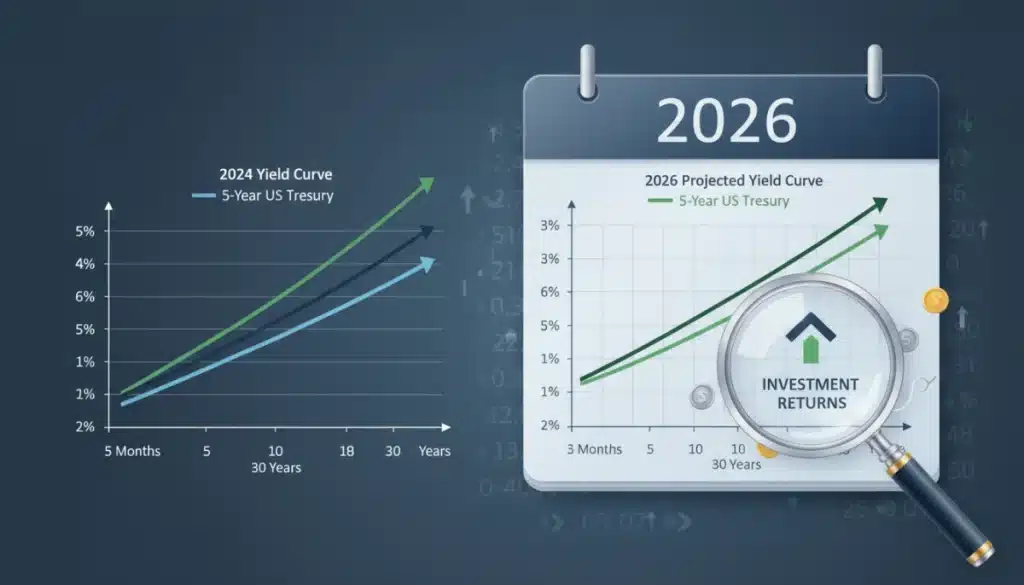
For income investors, understanding the projected landscape of US Treasury bond yields in 2026, particularly the comparison between 5-year and 10-year notes, is crucial for optimizing portfolio stability and returns.
As we navigate the evolving financial landscape, understanding where to strategically place your investments becomes paramount. For income-focused investors, a critical area of focus is the trajectory of US Treasury Bond Yields in 2026: A Comparison of 5-Year vs. 10-Year for Income Investors. This article will delve into the nuances of these key fixed-income instruments, helping you make informed decisions for your portfolio.
Understanding Treasury Bonds: The Foundation of Fixed Income
Treasury bonds, issued by the U.S. Department of the Treasury, are considered among the safest investments globally. They represent a loan made by an investor to the U.S. government, offering regular interest payments and the return of the principal at maturity. For income investors, these instruments provide a predictable cash flow and a hedge against market volatility.
The safety and liquidity of Treasury bonds make them a cornerstone of many diversified portfolios. Their yields are closely watched as they influence borrowing costs across the economy, from mortgages to corporate bonds. Understanding the mechanics of these bonds is the first step toward making sound investment choices.
The Role of Duration in Treasury Investments
Duration is a key concept when evaluating Treasury bonds. It measures a bond’s sensitivity to changes in interest rates. Longer-duration bonds, like the 10-year Treasury, are generally more sensitive to rate fluctuations than shorter-duration bonds, such as the 5-year Treasury.
- Interest Rate Sensitivity: Higher duration means greater price changes for a given change in interest rates.
- Reinvestment Risk: Shorter-duration bonds expose investors to greater reinvestment risk if rates fall.
- Maturity and Yield: Typically, longer maturities offer higher yields to compensate for increased interest rate risk.
For income investors, balancing duration with yield expectations is crucial. A shorter duration might offer less yield but greater capital preservation in a rising rate environment, while a longer duration might lock in higher yields if rates are expected to fall or remain stable.
Factors Influencing US Treasury Yields in 2026
Projecting Treasury yields for 2026 involves analyzing a complex interplay of economic forces. These factors include inflation expectations, Federal Reserve policy, economic growth, and global geopolitical events. Each plays a significant role in shaping the supply and demand for government debt.
Inflation is perhaps the most significant driver. If inflation is expected to remain elevated, investors will demand higher yields to compensate for the erosion of their purchasing power. Conversely, disinflationary pressures could lead to lower yield expectations.
Federal Reserve Policy and its Impact
The Federal Reserve’s monetary policy decisions, particularly regarding the federal funds rate, directly influence short-term Treasury yields and indirectly affect longer-term yields. By 2026, the Fed’s stance on inflation and economic growth will be a primary determinant of yield levels.
The Fed’s actions can impact investor sentiment and market expectations. Forward guidance on interest rates, quantitative easing or tightening programs, and statements from Fed officials all contribute to how the market prices Treasury bonds.
- Interest Rate Hikes: Typically push yields higher across the curve.
- Quantitative Tightening: Reduces demand for Treasuries, potentially increasing yields.
- Economic Outlook: A strong economy might lead to higher rates, while a recession could prompt cuts.
Investors must closely monitor the Fed’s communications and economic data releases to anticipate potential shifts in monetary policy that could impact their fixed-income portfolios.
5-Year vs. 10-Year Treasury Notes: A Detailed Comparison
When considering US Treasury Bond Yields in 2026: A Comparison of 5-Year vs. 10-Year for Income Investors, it’s essential to understand the distinct characteristics of each maturity. While both are highly liquid and credit-risk-free, their responses to market conditions and suitability for different investment objectives vary significantly.
The 5-year Treasury note typically offers a lower yield than the 10-year note, reflecting its shorter duration and thus lower interest rate risk. However, it also presents a quicker opportunity to reinvest at potentially higher rates if the interest rate environment improves.
The 10-year Treasury note, often seen as a benchmark for long-term interest rates, offers a higher yield to compensate for its extended maturity. This makes it attractive for investors seeking to lock in a certain income stream for a longer period, especially if they anticipate stable or declining interest rates.
Investment Horizons and Risk Tolerance
The choice between 5-year and 10-year Treasuries often comes down to an investor’s investment horizon and risk tolerance. A shorter horizon might favor the 5-year note due to less interest rate sensitivity, while a longer horizon might lean towards the 10-year for its higher yield.
Risk tolerance also plays a role. Investors who are more sensitive to potential capital losses from rising interest rates might prefer the 5-year, while those comfortable with more volatility for potentially higher returns might opt for the 10-year.
Diversification across different maturities can also be a prudent strategy, allowing investors to capture benefits from various parts of the yield curve while mitigating specific risks.
Projected Economic Landscape for 2026
The economic forecast for 2026 will heavily influence Treasury yields. Key indicators such as Gross Domestic Product (GDP) growth, unemployment rates, and consumer spending will paint a picture of the overall health of the U.S. economy. A robust economy might signal higher inflation and, consequently, higher bond yields.
Conversely, a slowdown or recession could lead to lower yields as investors flock to safe-haven assets like Treasuries, driving up demand and pushing down yields. Global economic conditions, trade policies, and geopolitical stability will also contribute to the economic outlook.

Inflation Expectations and Real Yields
Inflation expectations are paramount. Investors are concerned with real yields, which represent the nominal yield minus inflation. If investors anticipate high inflation, they will demand higher nominal yields to ensure their real returns remain positive.
The market’s perception of future inflation, often reflected in inflation-protected securities (TIPS), provides valuable insights. By 2026, if inflation is perceived to be under control, real yields might stabilize, and nominal yields could reflect this stability.
- High Inflation: Typically leads to higher nominal yields to maintain real returns.
- Low Inflation: Can result in lower nominal yields as purchasing power erosion is less of a concern.
- TIPS Market: Offers a gauge of market-implied inflation expectations.
Monitoring inflation data and market sentiment will be crucial for forecasting yield movements.
Strategies for Income Investors in 2026
For income investors, navigating the 2026 Treasury market requires a thoughtful approach. Depending on your outlook for interest rates and economic growth, different strategies may be more suitable. The goal is to maximize income while preserving capital and managing risk.
One strategy involves laddering maturities, where an investor buys bonds with different maturity dates. As shorter-term bonds mature, the proceeds can be reinvested into longer-term bonds, allowing for continuous income and flexibility to adapt to changing yield environments.
Yield Curve Analysis
Understanding the shape of the yield curve is essential. A normal yield curve, where longer maturities offer higher yields, suggests economic expansion. An inverted yield curve, where short-term yields are higher than long-term yields, can sometimes signal an impending recession.
By 2026, the shape of the yield curve will provide clues about market expectations for future economic growth and inflation. Income investors can use this information to decide whether to lean into shorter or longer-duration assets.
Furthermore, considering the spread between the 5-year and 10-year yields can offer insights. A widening spread might suggest stronger long-term growth expectations, while a narrowing spread could indicate concerns about future economic performance.
Potential Risks and Opportunities for Income Investors
Investing in Treasury bonds, while considered safe, is not without its risks and opportunities, particularly when looking at US Treasury Bond Yields in 2026: A Comparison of 5-Year vs. 10-Year for Income Investors. The primary risk for fixed-income investors is interest rate risk, which refers to the potential for bond prices to fall if interest rates rise.
For income investors, this means that if you need to sell your bonds before maturity in a rising rate environment, you might receive less than your initial investment. However, if you hold to maturity, you will receive your principal back, regardless of interim price fluctuations.
Opportunities in a Dynamic Market
Despite the risks, dynamic market conditions also present opportunities. If interest rates are expected to decline, locking in higher yields with longer-term bonds can be advantageous. Conversely, if rates are expected to rise, shorter-term bonds offer the flexibility to reinvest at higher yields sooner.
Another opportunity lies in the potential for capital appreciation if interest rates fall. While income investors primarily focus on yield, a decrease in rates can lead to an increase in the market value of existing bonds, offering a secondary source of return.
- Rising Rates: Favor shorter-duration bonds and laddering strategies.
- Falling Rates: Benefit longer-duration bonds for locked-in yields and capital gains.
- Stable Rates: Allows for predictable income streams from both 5-year and 10-year notes.
Careful monitoring of economic forecasts and market signals will empower income investors to seize these opportunities effectively.
Diversification and Portfolio Construction for 2026
Effective portfolio construction in 2026 will involve diversifying across various asset classes, with Treasury bonds playing a crucial role in providing stability and income. While this article focuses on Treasuries, a balanced portfolio typically includes equities, real estate, and other fixed-income instruments.
Within the fixed-income allocation, diversification extends to maturities. Combining 5-year and 10-year Treasuries can help balance interest rate risk with yield potential. This approach allows investors to benefit from different segments of the yield curve.
Consider also incorporating other high-quality fixed-income assets, such as corporate bonds or municipal bonds, if they align with your risk tolerance and investment objectives. These can offer higher yields than Treasuries but come with additional credit risk.
Rebalancing and Active Management
Regular portfolio rebalancing is essential to maintain your desired asset allocation and risk profile. As market conditions change, the weightings of your various investments may shift, necessitating adjustments to bring them back into alignment.
Active management, for some investors, might involve strategically adjusting exposure to different Treasury maturities based on their outlook for interest rates and the economy. This requires a deeper understanding of market dynamics and a willingness to make timely adjustments.
For many income investors, a more passive approach with periodic rebalancing and a focus on long-term goals will be sufficient. The key is to have a clear investment plan and stick to it, while remaining flexible enough to adapt to significant market shifts.
| Key Aspect | Brief Description |
|---|---|
| 5-Year Treasury Notes | Lower interest rate risk, quicker reinvestment opportunities, typically lower yields. |
| 10-Year Treasury Notes | Higher interest rate risk, potentially higher yields, locks in income for longer. |
| Inflation Impact | Higher inflation typically leads to higher nominal yields to preserve real returns. |
| Fed Policy | Federal Reserve decisions on interest rates significantly influence Treasury yields. |
Frequently Asked Questions About Treasury Yields in 2026
The main difference lies in their maturity periods and interest rate sensitivity. 5-year notes mature sooner and are less sensitive to interest rate changes, typically offering lower yields. 10-year notes have a longer maturity, higher interest rate risk, and usually provide higher yields to compensate.
Inflation erodes the purchasing power of future bond payments. If inflation is expected to rise, investors demand higher nominal yields on Treasury bonds to ensure their real (inflation-adjusted) returns remain attractive. This pushes bond yields upwards.
Treasury bonds are backed by the full faith and credit of the U.S. government, making them virtually free of credit risk. This high level of security, coupled with their liquidity, makes them a preferred safe-haven asset for investors, especially during economic uncertainty.
The priority depends on individual financial goals and risk tolerance. While yield provides income, capital preservation protects the principal. A balanced approach, possibly through laddering or diversifying maturities, can help achieve both, adapting to the 2026 market conditions.
The Federal Reserve significantly influences Treasury yields through its monetary policy, primarily by setting the federal funds rate and engaging in quantitative easing or tightening. These actions impact short-term rates directly and influence market expectations for long-term yields.
Conclusion
As income investors look towards 2026, understanding the dynamics of US Treasury Bond Yields in 2026: A Comparison of 5-Year vs. 10-Year for Income Investors is fundamental for informed decision-making. The interplay of Federal Reserve policy, inflation expectations, and broader economic trends will continue to shape the fixed-income landscape. By carefully evaluating the characteristics of both 5-year and 10-year Treasury notes, and considering their suitability within a diversified portfolio, investors can strategically position themselves to achieve their income goals while managing risk effectively. Remaining agile and informed will be key to navigating the opportunities and challenges presented by the evolving bond market.
Autor