5 Innovative Teaching Methods Transforming US Classrooms in 2026
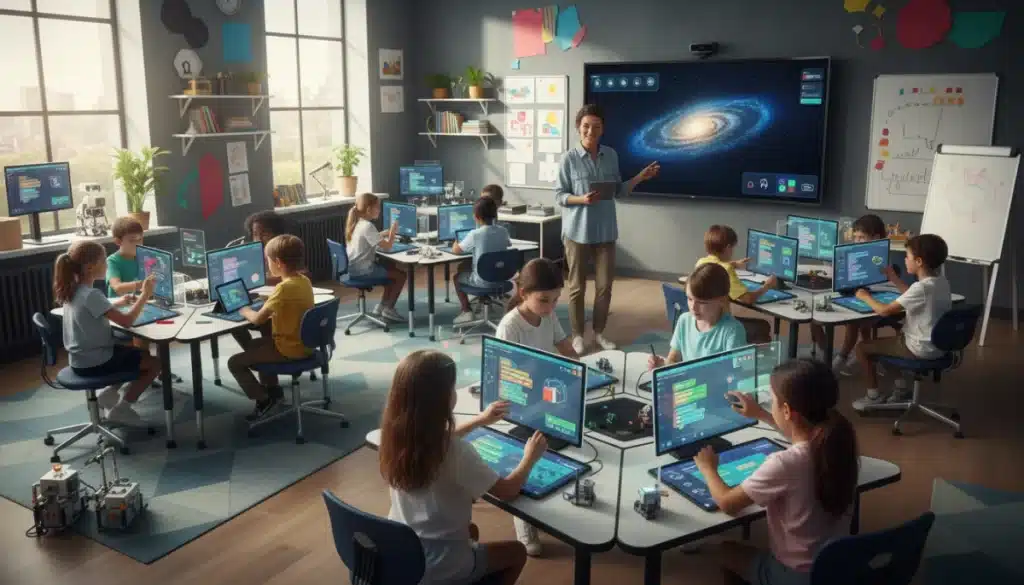
The integration of personalized learning paths and AI-driven instruction is fundamentally reshaping US classrooms, fostering greater student engagement and academic achievement by 2026.
The landscape of education in the United States is perpetually evolving, driven by technological advancements, pedagogical research, and a growing understanding of diverse learning needs. By 2026, we anticipate a significant transformation in how students learn and teachers instruct. This article provides an insider’s look into 5 innovative teaching methods transforming US classrooms in 2026, offering insights into the strategies that are set to redefine the educational experience.
Personalized Learning Paths: Tailoring Education to Every Student
Personalized learning paths represent a fundamental shift from a one-size-fits-all approach to an educational model that caters specifically to individual student needs, interests, and paces. This method leverages data and technology to create unique learning journeys, ensuring that each student receives instruction that is most effective for them.
The core principle behind personalized learning is recognizing that every student is unique. Traditional classroom settings often struggle to accommodate the wide spectrum of learning styles and speeds present in any given group. Personalized learning aims to bridge this gap, offering a more equitable and effective educational experience.
AI-driven Assessment and Feedback
Artificial intelligence plays a crucial role in the development and implementation of personalized learning. AI algorithms can analyze student performance data, identify areas of strength and weakness, and recommend specific resources or activities to address those needs. This real-time feedback loop is invaluable for both students and educators.
- Adaptive learning platforms adjust content difficulty based on student progress.
- AI tutors provide instant, individualized support and explanations.
- Automated grading systems free up teacher time for more direct student interaction.
Flexible Learning Environments
Beyond technology, personalized learning often involves creating flexible learning environments. This can mean varying group sizes, offering choice in learning activities, and allowing students to demonstrate mastery in multiple ways. The goal is to empower students to take ownership of their learning.
The benefits of personalized learning are extensive. Students show increased engagement, improved academic performance, and a greater sense of autonomy. For teachers, it allows them to focus on facilitating deeper learning and providing targeted support, rather than delivering uniform instruction.
Project-Based Learning (PBL): Real-World Application and Critical Thinking
Project-Based Learning (PBL) has gained significant traction as an innovative teaching method that moves beyond rote memorization to engage students in solving real-world problems. This approach encourages critical thinking, collaboration, and the application of knowledge in meaningful contexts.
In a PBL classroom, students work on extended projects that require them to investigate a challenging question or problem. They design solutions, conduct research, and present their findings, often to an authentic audience. This process mimics professional work environments, preparing students for future careers and civic engagement.
Interdisciplinary Connections
PBL naturally fosters interdisciplinary learning. A single project might require students to apply knowledge from science, mathematics, language arts, and social studies. This integrated approach helps students see the connections between different subjects and understand their relevance to real-world issues.
- Students develop strong research and inquiry skills.
- Collaboration and communication are central to project success.
- Projects often address community needs, promoting civic responsibility.
Developing 21st-Century Skills
Beyond academic content, PBL is instrumental in developing essential 21st-century skills such as problem-solving, critical thinking, creativity, and communication. These are the skills employers consistently seek and are crucial for navigating a rapidly changing world.
The shift to PBL requires a different role for the teacher, moving from a lecturer to a facilitator and guide. This can be challenging but ultimately leads to a more dynamic and student-centered classroom. The outcomes include deeper understanding, increased motivation, and a greater sense of accomplishment among students.
Extended Reality (XR) in Education: Immersive Learning Experiences
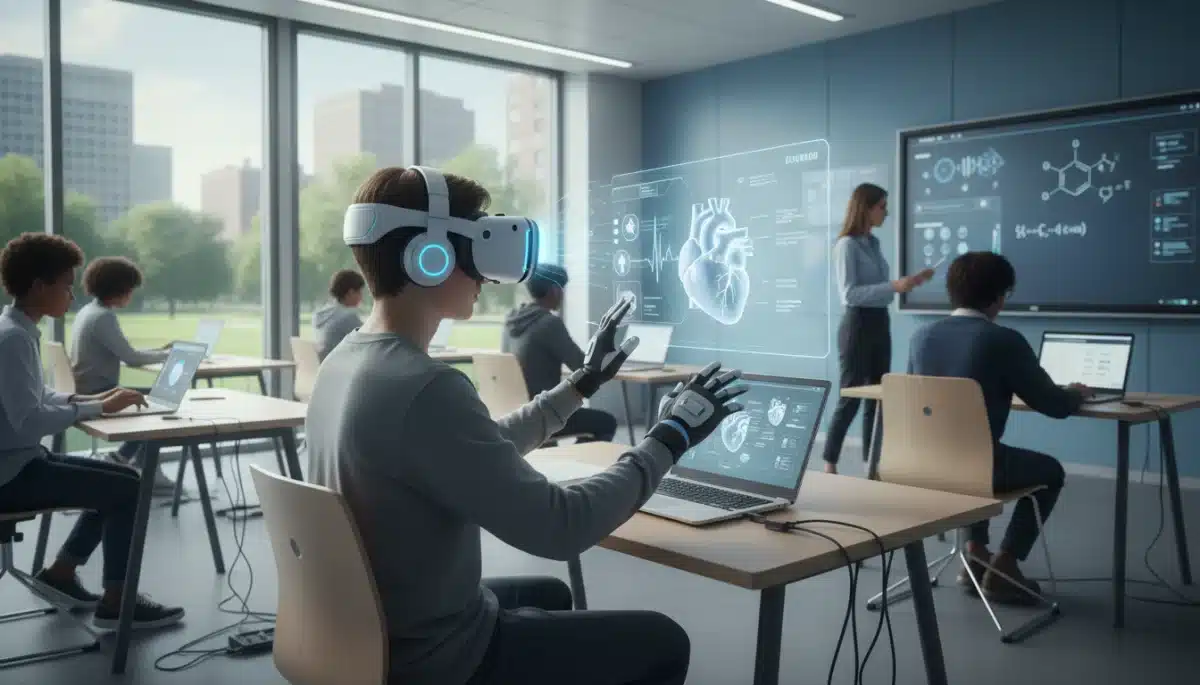
Extended Reality (XR), encompassing Virtual Reality (VR), Augmented Reality (AR), and Mixed Reality (MR), is rapidly moving from niche technology to a powerful tool for educational transformation. By 2026, XR is poised to create immersive and interactive learning experiences that were once unimaginable.
XR technologies offer unique opportunities to transport students to historical events, explore complex scientific concepts in 3D, or practice vocational skills in a safe, simulated environment. This level of immersion can significantly enhance engagement and understanding, particularly for abstract or difficult-to-visualize topics.
Virtual Field Trips and Simulations
Imagine students exploring ancient Rome, dissecting a frog virtually, or practicing welding techniques without the need for expensive equipment or physical travel. VR makes these experiences possible, offering unparalleled access to learning opportunities.
- Students can visit remote locations and historical sites.
- Complex scientific experiments can be conducted safely and repeatedly.
- Vocational training benefits from realistic simulations.
Augmented Reality for Interactive Learning
AR overlays digital information onto the real world, turning everyday objects into interactive learning tools. Students can use tablets or smartphones to view 3D models of organs, explore constellations in their backyard, or interact with digital textbooks that come alive.
The integration of XR in education goes beyond novelty; it addresses diverse learning styles and provides experiential learning that can be difficult to replicate in traditional settings. While initial investment and content creation are considerations, the potential for profound learning outcomes makes XR a vital component of future classrooms.
Social-Emotional Learning (SEL) Integration: Nurturing the Whole Child
While often seen as separate from academics, Social-Emotional Learning (SEL) is increasingly recognized as a critical component of a holistic education. By 2026, SEL will be deeply integrated into the curriculum, acknowledging its profound impact on student well-being, academic achievement, and future success.
SEL focuses on developing skills such as self-awareness, self-management, social awareness, relationship skills, and responsible decision-making. These competencies are crucial for navigating personal challenges, building positive relationships, and thriving in school and beyond.
Mindfulness and Emotional Regulation
Classrooms are incorporating practices like mindfulness exercises and emotional check-ins to help students understand and manage their feelings. This leads to reduced stress, improved focus, and a more positive classroom climate, which in turn enhances learning.
- Daily mindfulness moments promote self-awareness.
- Conflict resolution strategies are taught explicitly.
- Empathy-building activities foster understanding and compassion.
Building Resilient Learners
By teaching students how to set goals, manage their emotions, and make responsible choices, SEL helps build resilience. This is vital for students to overcome setbacks, adapt to change, and maintain motivation in their academic and personal lives.
The integration of SEL is not just about making students ‘feel good’; it’s about equipping them with essential life skills that directly impact their ability to learn and succeed. Schools are finding that a strong SEL foundation leads to fewer behavioral issues, improved academic performance, and a more supportive learning community.
Competency-Based Education (CBE): Mastery Over Seat Time
Competency-Based Education (CBE) represents a paradigm shift from traditional time-based learning to a model where students advance based on demonstrated mastery of skills and knowledge, rather than on the amount of time spent in a classroom. This method is gaining traction for its ability to ensure deep understanding and cater to individual learning paces.
In a CBE system, learning objectives are clearly defined as competencies, and students progress once they can prove they have mastered those competencies. This means that some students might move through material more quickly, while others can take the time they need to achieve mastery, eliminating the pressure of a fixed schedule.
Flexible Pacing and Assessment
CBE allows for highly flexible pacing, which is particularly beneficial for students who learn at different speeds. Assessments in CBE are designed to measure genuine understanding and application of skills, often through projects, portfolios, or practical demonstrations, rather than traditional tests.
- Students progress at their own optimal pace.
- Assessments focus on demonstrated mastery, not just recall.
- Learning is tailored to ensure all students achieve competency.
Clear Learning Outcomes
A key strength of CBE is its emphasis on clear, measurable learning outcomes. Students and teachers know exactly what is expected, making the learning process transparent and goal-oriented. This clarity can significantly increase student motivation and focus.
CBE challenges the conventional structure of education but offers substantial benefits by ensuring that all students achieve a high level of proficiency before moving on. This approach not only prepares students more effectively for higher education and careers but also fosters a deeper, more meaningful engagement with their learning.
Blended Learning Models: Optimizing Digital and Traditional Instruction
Blended learning, a pedagogical approach that combines online educational materials and opportunities for interaction with traditional place-based classroom methods, is not new, but its evolution by 2026 will see a more sophisticated and optimized integration. This method aims to leverage the best of both digital and in-person instruction.
The strength of blended learning lies in its flexibility and ability to cater to diverse learning preferences. It allows students to engage with content at their own pace online, often outside of the classroom, and then apply that knowledge through collaborative activities, discussions, and direct teacher interaction during face-to-face sessions.
Flipped Classroom Approach
A common blended learning model is the ‘flipped classroom,’ where students learn new content at home through online videos or readings, and class time is then dedicated to discussions, problem-solving, and project-based work. This maximizes the value of in-person instruction by focusing on application and deeper understanding.
- Online resources provide foundational knowledge.
- Classroom time is used for interactive and collaborative activities.
- Teachers can provide immediate, targeted support during application tasks.
Data-Driven Instruction in Blended Environments
Blended learning environments generate a wealth of data on student engagement and performance in online modules. Teachers can use this data to identify students who need additional support, differentiate instruction, and personalize learning experiences, making the in-person sessions more effective.
The blend of online flexibility and in-person interaction fosters a dynamic learning environment. It encourages self-directed learning while ensuring students receive the necessary guidance and social interaction crucial for comprehensive development. This approach is highly adaptable and resilient, proving valuable in various educational contexts.
| Method | Brief Description |
|---|---|
| Personalized Learning | Tailoring education to individual student needs and pace using data and AI. |
| Project-Based Learning | Engaging students in solving real-world problems through extended projects. |
| Extended Reality (XR) | Using VR/AR/MR for immersive and interactive learning experiences. |
| Competency-Based Education | Advancing students based on demonstrated mastery of skills, not seat time. |
Frequently Asked Questions About Innovative Teaching
Personalized learning tailors educational content and pace to individual student needs, interests, and learning styles. It benefits students by increasing engagement, improving academic performance, and fostering a greater sense of ownership over their education through customized learning paths and AI-driven support.
PBL prepares students by engaging them in real-world problem-solving, fostering critical thinking, collaboration, and communication skills. It allows students to apply academic knowledge in meaningful contexts, mimicking professional environments and developing essential 21st-century competencies vital for future careers.
By 2026, XR (VR, AR, MR) will provide immersive and interactive learning experiences, allowing students to explore complex concepts, conduct virtual field trips, and practice skills in simulated environments. This enhances engagement, deepens understanding, and makes abstract topics more accessible, transforming traditional learning methods.
SEL is increasingly integrated because it develops crucial skills like self-awareness, emotional management, and responsible decision-making. These competencies improve student well-being, reduce behavioral issues, and enhance academic performance, creating a more supportive and effective learning environment for holistic child development.
The main advantage of CBE is that students progress based on demonstrated mastery of skills and knowledge, rather than fixed timeframes. This ensures a deeper understanding, accommodates individual learning paces, and provides clear learning outcomes, better preparing students for higher education and future careers by guaranteeing proficiency.
Conclusion
The educational landscape in the United States is on the cusp of a profound transformation, with the widespread adoption of these innovative teaching methods by 2026. From personalized learning paths that cater to individual needs to immersive XR experiences and the holistic development fostered by SEL, the future classroom promises to be more engaging, effective, and equitable. These advancements underscore a collective commitment to preparing students not just with knowledge, but with the critical skills and adaptability required to thrive in an ever-evolving world. Embracing these pedagogical shifts is essential for educators, policymakers, and parents alike to ensure the next generation is well-equipped for the challenges and opportunities ahead.
Autor