2026 US Dollar Exchange Rate Forecast: Investment Impact
Understanding the 2026 US Dollar exchange rate forecast is crucial for international investors, as its movements will significantly shape global investment strategies and portfolio valuations across various asset classes.
As we navigate the complexities of the global economy, anticipating the trajectory of the 2026 US Dollar Exchange Rate: Impact on International Investments becomes paramount for anyone involved in cross-border finance. What factors will truly dictate the dollar’s strength or weakness in the coming years, and how should investors adjust their portfolios accordingly? This article delves into the critical elements influencing the dollar’s future, offering insights to help you make informed decisions.
Understanding the Fundamentals Driving Exchange Rates
The value of the US dollar, like any currency, is a complex interplay of various economic and geopolitical forces. Predicting its movement in 2026 requires a deep understanding of these underlying fundamentals. Investors need to look beyond mere speculation and focus on quantifiable indicators that have historically influenced currency valuations.
Several key macroeconomic factors consistently exert pressure on exchange rates. These include interest rate differentials, inflation rates, economic growth disparities, and trade balances. Each of these components contributes to the dollar’s perceived value and its attractiveness to global investors.
Interest Rate Differentials and Monetary Policy
Central bank policies, particularly those of the Federal Reserve, are arguably the most significant short-to-medium term drivers of the US dollar. Higher interest rates tend to attract foreign capital seeking better returns, thereby increasing demand for the dollar. Conversely, lower rates can diminish its appeal.
- Federal Reserve’s Stance: The Fed’s forward guidance on interest rates and quantitative easing/tightening will be critical.
- Global Rate Environment: Comparative interest rates in other major economies (Eurozone, Japan, UK) will dictate capital flows.
- Inflation Expectations: The Fed’s response to inflation will directly influence its monetary policy decisions.
Inflation and Purchasing Power Parity
Inflation erodes the purchasing power of a currency. If inflation in the US is significantly higher than in other major economies, the dollar’s real value can depreciate over time. The concept of purchasing power parity (PPP) suggests that exchange rates should adjust to equalize the price of a basket of goods and services between countries.
While PPP is a long-term theory and rarely holds true in the short term, persistent inflation differentials can create pressure on currency valuations. Monitoring consumer price indices (CPI) and producer price indices (PPI) in the US and its trading partners will offer valuable clues.
In conclusion, the fundamental drivers of exchange rates are multifaceted. A holistic view, combining monetary policy expectations with inflation trends and economic performance, provides a robust framework for anticipating the dollar’s direction towards 2026. These forces will continually shape the investment landscape.
Geopolitical Landscape and its Influence on the Dollar
Beyond economic fundamentals, geopolitical events and global stability play an increasingly vital role in determining the US dollar’s status as a safe-haven currency. In times of uncertainty, investors often flock to the dollar, viewing it as a reliable store of value and liquidity, irrespective of immediate economic data.
The period leading up to 2026 is unlikely to be devoid of geopolitical tensions. Ongoing conflicts, trade disputes, and political shifts in major global powers can all trigger significant dollar movements. Understanding these risks is crucial for any international investment strategy.
Global Conflicts and Stability
Regional conflicts and broader geopolitical instability tend to strengthen the dollar. When global risk aversion rises, capital flows into US treasuries and dollar-denominated assets, increasing demand for the currency. This flight to safety dynamic has been observed repeatedly throughout history.
- Ukraine-Russia Conflict: Continued impact on energy markets and global supply chains.
- Sino-US Relations: Trade tensions and strategic competition between the US and China.
- Middle East Dynamics: Potential for regional instability affecting oil prices and global sentiment.
Political and Economic Policies Abroad
The political stability and economic policies of other major nations also indirectly affect the dollar. For instance, political turmoil in the Eurozone or slow economic growth in Japan could make US assets more attractive by comparison, thereby strengthening the dollar. Conversely, a resurgence in confidence in other major economies could draw capital away from the US.
The interconnectedness of the global financial system means that no major economy operates in isolation. A crisis or boom in one region can have ripple effects across currency markets, impacting the dollar’s relative strength. Investors should monitor political developments in key economic blocs.
Ultimately, the geopolitical landscape introduces an element of unpredictability to currency forecasting. While economic models provide a baseline, sudden shifts in global stability can rapidly alter the dollar’s trajectory. Prudent investors integrate these risks into their broader investment outlook.
Trade Balances and Capital Flows
The balance of payments, particularly the current account, is another critical determinant of a currency’s long-term value. A country’s trade balance reflects the difference between its exports and imports of goods and services. A persistent trade deficit means that a country is importing more than it is exporting, leading to a net outflow of currency.
For the US dollar, its role as the world’s primary reserve currency often allows it to sustain larger trade deficits without immediate depreciation. However, over time, large and sustained deficits can exert downward pressure on the dollar’s value. Capital flows, driven by investment decisions, also play a significant role.
Current Account Dynamics
The US has historically run a current account deficit, meaning it imports more goods and services and pays more in income to foreign investors than it receives. While this is often viewed as a negative, it also reflects the global demand for dollar-denominated assets and the US’s role as a consumer market.
Monitoring the size and trend of the current account deficit will be important. A significant widening could signal underlying economic imbalances that may eventually weaken the dollar. Conversely, any narrowing could be supportive of its value.
Foreign Direct Investment (FDI) and Portfolio Flows
Beyond trade, capital flows, including foreign direct investment (FDI) and portfolio investment (stocks and bonds), are powerful drivers of currency demand. When foreign investors buy US assets, they must exchange their local currency for dollars, increasing demand for the dollar.
- Attractiveness of US Markets: Strong economic growth, stable political environment, and innovative industries attract FDI.
- Yield Differentials: Higher returns on US bonds or equities compared to other markets can draw in portfolio investment.
- Global Liquidity: The dollar’s unparalleled liquidity makes it a preferred currency for international transactions and reserves.
Therefore, tracking global investment trends and the perceived attractiveness of US assets compared to those in other economies will provide crucial insights into dollar demand. These capital movements can often overshadow trade deficits in the short run, offering support to the currency.
Technological Advancement and Economic Structure
The structural evolution of the US economy, driven by technological advancements and innovation, can also indirectly influence the dollar’s long-term strength. A dynamic, innovative economy often attracts foreign investment and maintains a competitive edge in global markets, bolstering confidence in its currency.
By 2026, sectors like artificial intelligence, biotechnology, and renewable energy are expected to be even more prominent. The US leadership in these areas could sustain its economic dynamism, making dollar-denominated assets attractive globally.
Innovation and Productivity Growth
Sustained technological innovation leads to productivity growth, which is a key driver of long-term economic prosperity. Higher productivity can allow a country to produce goods and services more efficiently, enhancing its competitiveness on the global stage. This, in turn, can support a stronger currency.
The US economy’s ability to adapt and lead in emerging technologies will be a crucial factor. Investment in research and development, combined with a supportive regulatory environment, can foster continued innovation and economic resilience.
Digital Currencies and the Dollar’s Future
The rise of central bank digital currencies (CBDCs) and other digital assets introduces a new dimension to currency forecasting. While the dollar’s dominance is currently unquestioned, the long-term implications of digital currencies on international payments and reserve holdings are still evolving.
- US CBDC Development: The Federal Reserve’s approach to a digital dollar could impact its global standing.
- Competition from Other CBDCs: The adoption of CBDCs by other major economies might influence cross-border transactions.
- Stablecoins: The regulation and growth of dollar-pegged stablecoins could also play a role in maintaining dollar liquidity in the digital realm.
In essence, the structural health and innovative capacity of the US economy provide a foundational support for the dollar. As technology continues to reshape global commerce and finance, the dollar’s adaptability and the US’s leadership in key sectors will be vital for its sustained strength.
Impact on International Investments for 2026
The forecast for the 2026 US Dollar exchange rate is not merely an academic exercise; it has tangible and significant implications for international investors. Currency fluctuations can materially impact the returns on foreign assets, influence hedging strategies, and reshape capital allocation decisions across global portfolios.
A stronger dollar can erode the value of foreign earnings when repatriated, while a weaker dollar can boost them. Investors must factor these currency risks into their long-term planning, whether they are investing in equities, fixed income, or real estate abroad.
Equity Investments and Foreign Earnings
For US investors holding foreign equities, a strengthening dollar reduces the dollar value of their overseas returns. Conversely, a weakening dollar enhances these returns. For foreign investors holding US equities, the inverse is true. Companies with significant international revenues are particularly sensitive to currency movements.
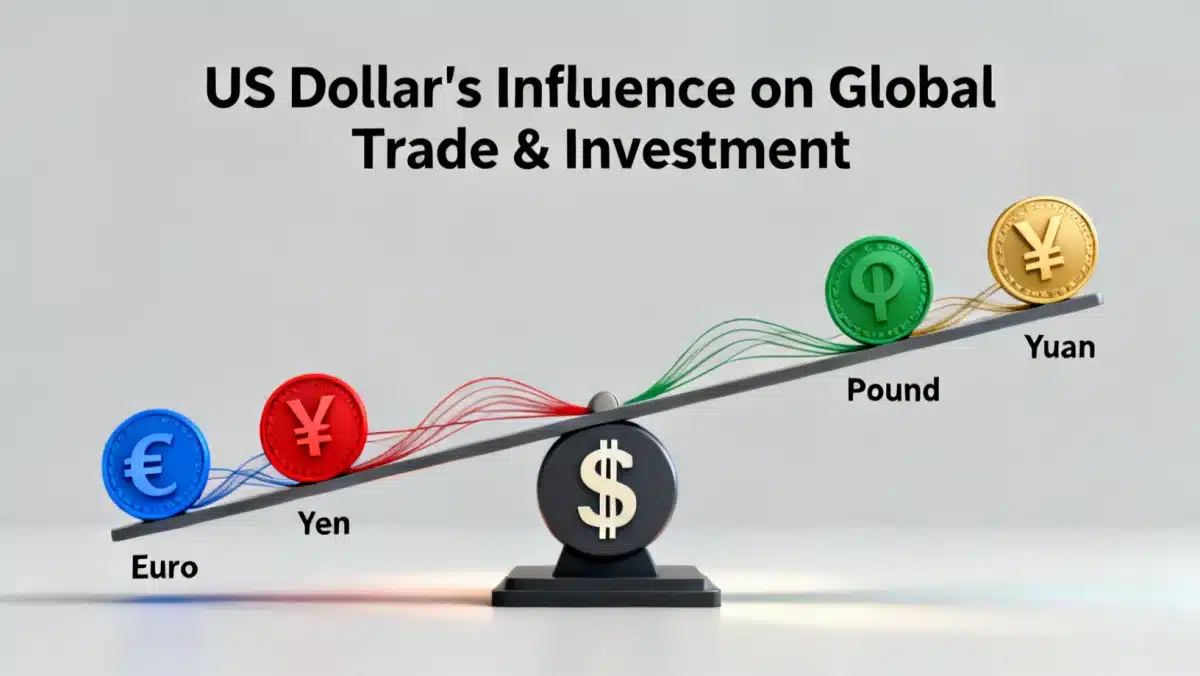
Investors should analyze the currency exposure of their international equity holdings. Diversification across different currencies and regions can help mitigate adverse currency impacts. Some investors may also consider currency hedging strategies to protect against unfavorable movements.
Fixed Income and Yield Differentials
Fixed-income investments are highly sensitive to interest rate differentials and currency movements. If US interest rates are rising relative to other countries, US bonds become more attractive, potentially strengthening the dollar. However, for foreign investors, currency depreciation can wipe out any yield advantage.
- Bond Yields: Higher US Treasury yields can attract foreign capital, supporting the dollar.
- Inflation Protection: Inflation-protected securities (TIPS) can offer some defense against currency erosion due to domestic inflation.
- Emerging Markets Debt: Dollar strength can make dollar-denominated emerging market debt more expensive to service for those countries.
In summary, the dollar’s trajectory in 2026 will be a critical variable for international investment performance. Investors need to assess their currency exposures, consider hedging options, and adjust their asset allocation to align with their outlook on the dollar’s strength or weakness. Proactive management of currency risk is key to preserving and growing international portfolios.
Strategic Implications for Global Investors
Navigating the global investment landscape requires a strategic approach that accounts for currency dynamics, especially concerning the US dollar. As we look towards 2026, investors must consider how potential shifts in the dollar’s value will influence their asset allocation, risk management, and overall return objectives. Ignoring currency risk is akin to ignoring a significant component of investment returns.
The strategies employed by global investors will vary depending on their home currency, risk appetite, and investment horizon. However, certain universal principles apply when considering the dollar’s future movements.
Diversification and Hedging Strategies
Diversification across different currencies and asset classes remains a cornerstone of prudent international investing. By holding assets denominated in various currencies, investors can naturally hedge against extreme movements in any single currency, including the dollar.
For those with specific currency exposures or a strong conviction about the dollar’s direction, active currency hedging might be considered. This involves using financial instruments like forward contracts or options to lock in an exchange rate. While hedging can protect against downside risk, it also comes with costs and can limit upside potential.
Asset Allocation Adjustments
An anticipated strong dollar might lead some investors to increase their allocation to US-denominated assets, such as US equities or high-yield corporate bonds, which could benefit from domestic economic strength. Conversely, an expected weak dollar could encourage a shift towards international equities or commodities, which tend to perform well when the dollar depreciates.
- Dollar-Denominated Assets: Attractive if the dollar is expected to strengthen, offering better real returns.
- Non-Dollar Assets: More appealing if the dollar is projected to weaken, enhancing returns upon conversion.
- Commodities: Often inversely correlated with the dollar, acting as a hedge against dollar weakness.
Ultimately, the strategic implications of the 2026 US Dollar forecast are profound. Investors need to continuously monitor the factors influencing the dollar, assess their portfolio’s currency exposure, and be prepared to make informed adjustments to their investment strategies. A dynamic approach to currency risk is essential for success in international markets.
| Key Factor | Impact on USD & Investments |
|---|---|
| Monetary Policy | Federal Reserve’s interest rate decisions directly influence dollar strength and global capital flows. |
| Geopolitical Stability | Global conflicts and uncertainties often drive investors to the dollar as a safe-haven asset. |
| Trade Balance | Persistent deficits can exert long-term downward pressure on the dollar, affecting trade competitiveness. |
| Technological Edge | US leadership in innovation attracts FDI, supporting economic growth and dollar value. |
Frequently Asked Questions About the 2026 US Dollar Forecast
Key economic factors include interest rate differentials set by the Federal Reserve, inflation rates compared to other major economies, the overall health and growth of the US economy, and the nation’s trade balance. These elements collectively shape investor confidence and capital flows.
Geopolitical instability, such as international conflicts or significant political shifts, often increases global risk aversion. This typically leads investors to seek safe-haven assets, with the US dollar being a primary beneficiary, boosting its demand and value.
Whether to hedge depends on an investor’s risk tolerance and outlook on the dollar. Hedging can protect against adverse currency movements but incurs costs. Diversification across currencies and asset classes is an alternative way to mitigate risk.
The development of a US central bank digital currency (CBDC) and the growth of stablecoins could influence the dollar’s liquidity and global transactional use. While unlikely to displace its reserve status by 2026, it’s a trend to monitor for long-term implications.
A stronger US dollar means that when foreign investment returns (e.g., from European stocks) are converted back into dollars, they will yield fewer dollars. This effectively reduces the dollar-denominated return for US investors holding foreign assets.
Conclusion
Forecasting the 2026 US Dollar Exchange Rate: Impact on International Investments involves a nuanced understanding of a multitude of interconnected factors. From the Federal Reserve’s monetary policy decisions and the ebb and flow of global inflation to the unpredictable nature of geopolitical events and the structural shifts within the US economy, each element plays a crucial role. For international investors, these dynamics are not abstract concepts but tangible forces that directly affect portfolio performance and strategic asset allocation. By diligently monitoring these indicators and adopting adaptive investment strategies, individuals and institutions can better navigate the complexities of currency markets, positioning themselves to capitalize on opportunities and mitigate risks in the evolving global financial landscape.
Autor