Student Loan Forgiveness 2026: Eligibility & Deadlines

Understanding student loan forgiveness 2026 involves navigating the latest eligibility requirements and critical application deadlines for various federal and potentially new programs designed to alleviate educational debt burdens.
Are you wondering about the future of your educational debt? As we approach 2026, understanding the landscape of student loan forgiveness 2026 is more crucial than ever. Many borrowers are seeking clarity on what programs are available and how to qualify for much-needed relief.
The Evolving Landscape of Student Loan Forgiveness Programs
The realm of student loan forgiveness is perpetually in motion, shaped by legislative changes, economic shifts, and administrative adjustments. For borrowers in 2026, staying updated on these changes is paramount to successfully navigating their path toward debt relief. While some programs are well-established, others may see modifications or new initiatives emerge.
Understanding the foundational programs is the first step. These typically include federal programs designed to support public service workers, those facing financial hardship, or individuals in specific professions. However, the exact parameters and benefits can fluctuate, making continuous monitoring of official sources essential for any borrower seeking to capitalize on these opportunities.
Key Federal Forgiveness Programs in Focus
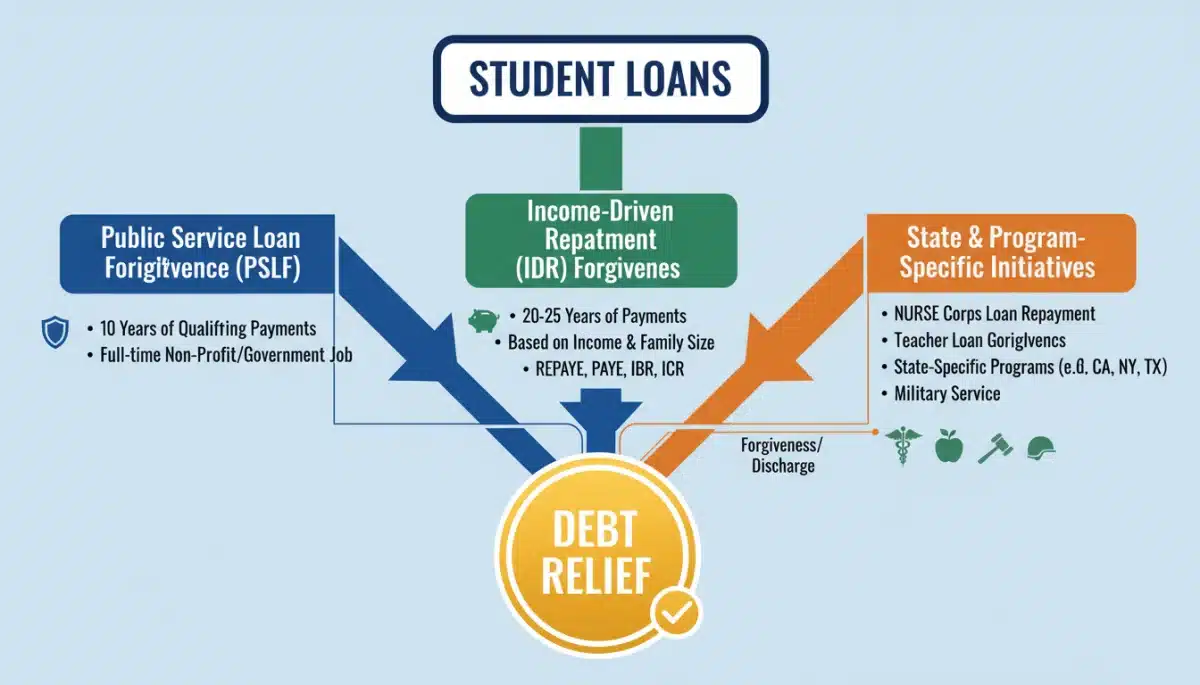
Several federal programs have historically offered pathways to student loan forgiveness. These programs generally cater to different circumstances and require adherence to specific service or payment conditions. Being aware of these distinct requirements is crucial for determining which program might be the best fit for your situation.
- Public Service Loan Forgiveness (PSLF): Designed for individuals working full-time for qualifying non-profit organizations or government agencies after making 120 qualifying monthly payments.
- Income-Driven Repayment (IDR) Plan Forgiveness: Offers forgiveness of remaining loan balances after 20 or 25 years of payments under an income-driven repayment plan, depending on the plan and loan type.
- Teacher Loan Forgiveness: Provides up to $17,500 in forgiveness for eligible teachers who work for five consecutive years in low-income schools or educational service agencies.
Beyond these, other programs like Total and Permanent Disability (TPD) discharge, borrower defense to repayment, and closed school discharge address specific circumstances. Each program has unique criteria that must be met, and borrowers should meticulously review these to ensure they are on the correct path. The government often provides detailed guidelines and tools to help borrowers understand their options, emphasizing the importance of utilizing these resources.
The eligibility criteria for these programs can be complex and are subject to change. For example, what constitutes a ‘qualifying payment’ for PSLF has been a point of confusion for many borrowers, leading to past adjustments in how payments are counted. Similarly, IDR plans have seen modifications to their terms, impacting the timeline for forgiveness. Therefore, borrowers must verify the most current requirements as 2026 approaches, ensuring their actions align with the latest regulations.
Eligibility Requirements for Student Loan Forgiveness in 2026
Determining your eligibility for student loan forgiveness in 2026 will depend heavily on the specific program you are targeting. While general principles remain, the detailed criteria can vary significantly. It is not a one-size-fits-all scenario, and personal circumstances play a substantial role in qualification.
For most federal programs, the type of loan you possess is a primary factor. Generally, only federal direct loans are eligible for the most expansive forgiveness programs. If you have Federal Family Education Loan (FFEL) Program loans or Perkins Loans, you might need to consolidate them into a Direct Consolidation Loan to become eligible for certain benefits, such as PSLF or specific IDR plans. This consolidation step itself has its own set of rules and deadlines.
Understanding Loan Types and Consolidation
The type of student loan you hold is a foundational element in determining your eligibility for forgiveness programs. Federal Direct Loans are typically the most flexible when it comes to forgiveness options, while other federal loan types might require specific actions to become eligible. Private student loans, issued by banks or other financial institutions, are almost never eligible for federal forgiveness programs.
Consolidating your loans can be a strategic move, especially if you have older federal loans that don’t directly qualify for certain programs. A Direct Consolidation Loan combines multiple federal education loans into a single loan with one servicer and a fixed interest rate. This process can open doors to PSLF and certain IDR plans that might otherwise be inaccessible. However, it’s crucial to understand that consolidation can sometimes reset your payment count towards forgiveness, so careful consideration and professional advice are recommended.
Beyond loan type, other factors such as employment history, income level, and disability status are key. For instance, PSLF requires full-time employment with a qualifying employer, and IDR plans assess your income and family size to determine your monthly payment. These requirements are not static and can be influenced by policy changes, underscoring the need for borrowers to frequently consult official government resources or their loan servicer. The more informed you are about these intricate details, the better equipped you will be to meet the necessary conditions for forgiveness.
Application Deadlines and How to Apply
Missing an application deadline can be the difference between receiving significant debt relief and continuing to carry your loan burden. As 2026 approaches, it is imperative to mark your calendar with any relevant dates and understand the application processes for various student loan forgiveness programs. While some programs have rolling applications, others might have specific windows.
The application process itself can range from straightforward forms to more complex documentation requirements. It’s not uncommon for borrowers to need to submit employment certifications, income verification, or other supporting documents to prove their eligibility. Starting this process early can help mitigate potential delays or issues that might arise.
Navigating the Application Process Efficiently
Applying for student loan forgiveness requires meticulous attention to detail and a clear understanding of each program’s specific requirements. The first step is always to gather all necessary documentation. This typically includes records of your loan types, payment history, and employment verification, especially for programs like PSLF. Having these documents organized beforehand can significantly streamline the application process and reduce stress.
- Identify the correct application form: Each program has its own form, often available on the Department of Education’s Federal Student Aid website.
- Complete all sections accurately: Incomplete or incorrect information can lead to delays or rejection. Double-check every field before submission.
- Submit supporting documentation: Be prepared to provide proof of income, employment, or other relevant circumstances as required by the specific program.
Many programs, particularly PSLF, require annual certification of employment to track qualifying payments. This is not a one-time application but an ongoing process that helps ensure you are on track. For IDR plans, you’ll need to recertify your income and family size annually. Failing to do so can result in your monthly payments increasing and potentially losing credit for qualifying payments made. Therefore, staying proactive with these annual requirements is just as important as the initial application.
Furthermore, it is advisable to keep copies of all submitted applications and supporting documents for your records. This can be invaluable if there are any discrepancies or issues that arise in the future. The Department of Education and your loan servicer are the primary points of contact for questions and assistance, and maintaining clear communication with them throughout the process is highly recommended to avoid any missteps.
Potential New Forgiveness Initiatives and Policy Changes
The landscape of student loan forgiveness is dynamic, with ongoing discussions and potential policy changes that could introduce new initiatives or modify existing ones by 2026. Borrowers should remain vigilant for announcements from federal agencies and legislative bodies, as these could significantly impact their eligibility and options for debt relief.
Historically, administrations have explored various approaches to address the student debt crisis, ranging from targeted forgiveness to broader proposals. While the specifics of any new initiatives are speculative until officially announced, staying informed about policy debates and proposals can provide an early indication of what might be on the horizon. These could include expanded eligibility for existing programs, new types of forgiveness for specific groups, or even large-scale debt cancellation efforts.
Staying Informed on Legislative Developments
The political and legislative environment plays a significant role in shaping student loan policy. New bills or executive actions can emerge that either enhance or restrict forgiveness opportunities. To stay ahead, borrowers should regularly check reliable news sources that cover federal education policy and economic developments. Official government websites, such as the Department of Education’s student aid portal, are also crucial for direct updates.
- Follow legislative news: Keep an eye on congressional discussions and proposed bills related to higher education and student debt.
- Monitor executive actions: Presidential directives or agency announcements can introduce significant changes to existing programs or create new ones.
- Consult official government sources: The Federal Student Aid website is the most authoritative source for program updates and policy changes.
It’s important to differentiate between proposed policies and enacted laws. Many ideas are discussed and debated, but only those that pass through the legislative process or are implemented via executive order will actually affect borrowers. Therefore, while it’s good to be aware of proposals, focus your planning on confirmed changes. This proactive approach ensures you are prepared to act quickly if new opportunities for student loan forgiveness arise, maximizing your chances of benefiting from any future relief efforts.
Any new initiatives would likely come with their own set of eligibility criteria and application procedures. These could be tailored to specific economic conditions, educational backgrounds, or professional fields. For instance, there might be programs targeting healthcare workers, educators, or individuals in other high-demand sectors. The key will be to carefully read and understand the fine print of any new program to determine if you qualify and what steps you need to take.
Impact of Economic Factors on Forgiveness Programs
Economic conditions significantly influence the viability and scope of student loan forgiveness programs. In 2026, factors such as inflation rates, employment levels, and the overall economic outlook could play a critical role in how existing programs are maintained or how new initiatives are funded and implemented. A strong economy might lead to more robust support for forgiveness, while an economic downturn could shift priorities.
Government budgets are directly affected by the economy, which in turn dictates the resources available for debt relief. Higher inflation, for example, can increase the cost of administering programs and potentially reduce the purchasing power of allocated funds. Conversely, a period of economic stability might create a more favorable environment for expanding existing programs or introducing new ones aimed at stimulating economic growth through consumer debt reduction.
Economic Trends and Their Influence on Student Debt Relief
The broader economic environment often dictates the political will and financial capacity to enact and sustain student loan forgiveness policies. As we look towards 2026, several economic indicators will be particularly relevant. These include the national debt, GDP growth, and the labor market’s health. Policymakers frequently weigh the potential economic benefits of debt relief, such as increased consumer spending and reduced default rates, against the costs to taxpayers and the federal budget.
- Inflation: High inflation can erode the value of loan balances, but also impacts government spending and public support for large-scale forgiveness.
- Interest rates: Changes in federal interest rates can affect the cost of borrowing for new students and the overall burden of existing debt.
- Employment rates: A strong job market might reduce the perceived urgency for broad forgiveness, while high unemployment could spur calls for more relief.
Furthermore, the economic impact of previous forgiveness efforts will be closely scrutinized. Studies on how past debt relief has affected household finances, consumer behavior, and the broader economy will likely inform future policy decisions. For example, if data shows that forgiveness significantly boosted economic activity or reduced poverty rates, it could build a stronger case for continued or expanded programs. Conversely, if the impact is deemed minimal or unsustainable, future initiatives might be more conservative.
Borrowers should also consider how personal economic circumstances, such as job stability and income growth, intersect with forgiveness programs. An individual’s ability to make qualifying payments for IDR plans or to meet the employment requirements for PSLF is directly tied to their economic standing. Therefore, understanding both the macro and micro economic factors is essential for strategic planning around student loan forgiveness in the coming years.
Common Pitfalls and How to Avoid Them
Navigating student loan forgiveness programs can be complex, and many borrowers encounter common pitfalls that can jeopardize their chances of receiving relief. Being aware of these potential issues and taking proactive steps to avoid them is critical for a successful outcome. From incorrect documentation to misunderstanding program requirements, seemingly small errors can have significant consequences.
One of the most frequent mistakes is failing to stay in regular communication with your loan servicer. They are your primary point of contact for all loan-related matters, including forgiveness programs. Ignoring their communications or not updating your contact information can lead to missed deadlines or crucial information.
Strategies for a Smooth Forgiveness Journey
To maximize your chances of successful student loan forgiveness, a strategic and organized approach is essential. Avoiding common errors involves more than just filling out forms; it requires ongoing vigilance and a clear understanding of your responsibilities as a borrower. Proactive management of your loan accounts can prevent many of the issues that derail forgiveness efforts.
- Maintain meticulous records: Keep copies of all loan documents, payment confirmations, and correspondence with your loan servicer.
- Stay in touch with your servicer: Regularly check your account, update contact information, and respond promptly to any requests for information.
- Understand program nuances: Don’t assume; thoroughly research the specific requirements for any forgiveness program you are pursuing.
Another significant pitfall is relying on unofficial or outdated information. The student loan landscape is constantly changing, and what was true last year might not be true in 2026. Always refer to official government websites, such as studentaid.gov, or consult directly with your loan servicer for the most accurate and up-to-date information. Beware of scams or third-party companies that promise guaranteed forgiveness for a fee, as these often provide no real benefit and can be detrimental to your financial health.
Furthermore, many borrowers make the mistake of not understanding the tax implications of loan forgiveness. While some types of forgiveness are tax-free, others might be considered taxable income by the IRS. Consulting with a tax professional can help you understand these implications and plan accordingly. By being diligent, informed, and proactive, you can significantly improve your prospects for achieving student loan forgiveness and alleviating your debt burden.
Resources and Support for Borrowers
For borrowers seeking student loan forgiveness in 2026, a wealth of resources and support systems are available to help navigate the complexities. These resources range from official government websites to non-profit organizations and financial counselors, all designed to provide accurate information and guidance. Utilizing these tools can empower you to make informed decisions and successfully pursue your debt relief goals.
The Department of Education’s Federal Student Aid website (studentaid.gov) is arguably the most comprehensive and authoritative source of information. It offers detailed explanations of all federal loan programs, including eligibility criteria, application processes, and updates on policy changes. This site should be your first stop for any questions regarding your federal student loans.
Leveraging Official and Professional Assistance
Successfully navigating student loan forgiveness often requires more than just self-research; it benefits greatly from official and professional assistance. Loan servicers, for example, are mandated to provide information about repayment options and forgiveness programs. While they manage your loans, they can also guide you on the next steps for applying to certain programs. However, it’s always wise to cross-reference information with official government sources.
- Federal Student Aid (studentaid.gov): The definitive source for federal student loan information, program details, and application forms.
- Loan Servicers: Contact your specific loan servicer for personalized information about your loans and current eligibility for programs.
- Non-profit organizations: Many reputable non-profits offer free or low-cost counseling services for student loan borrowers.
Beyond official government channels, several non-profit organizations specialize in student loan counseling. These organizations often provide free or affordable services, offering personalized advice based on your unique financial situation. They can help you understand your loan types, explore repayment options, and guide you through the forgiveness application process. When seeking advice, always ensure the organization is reputable and accredited to avoid scams.
Furthermore, for complex financial situations or tax implications related to forgiveness, consulting with a financial advisor or a tax professional is highly recommended. These experts can provide tailored advice, helping you understand the long-term impact of forgiveness on your overall financial plan and ensure you comply with all tax regulations. By combining self-education with expert guidance, borrowers can confidently approach student loan forgiveness in 2026, making the most of available opportunities.
| Key Aspect | Brief Description |
|---|---|
| Eligibility Criteria | Varies by program (PSLF, IDR, Teacher Loan Forgiveness), often depends on loan type, employment, and income. |
| Application Process | Requires specific forms, documentation (employment, income), and often annual certification. |
| Policy Outlook | Expect potential new initiatives or modifications to existing programs due to economic and legislative factors. |
| Key Resources | Federal Student Aid website, loan servicers, and non-profit counseling organizations are vital. |
Frequently Asked Questions About Student Loan Forgiveness 2026
PSLF (Public Service Loan Forgiveness) is for those in public service careers after 120 qualifying payments. IDR (Income-Driven Repayment) forgiveness is for any federal loan borrower after 20 or 25 years of payments, regardless of profession, with remaining balances forgiven.
No, generally private student loans are not eligible for federal student loan forgiveness programs. These programs are specifically designed for federal student loans. Borrowers with private loans should explore refinancing options or other private lender relief programs.
It depends on your loan types. If you have older federal loans like FFEL or Perkins, consolidating them into a Direct Consolidation Loan may be necessary to become eligible for programs like PSLF or certain IDR plans. Always check program specifics.
Some forms of student loan forgiveness, such as PSLF, are not taxable. However, other types, like IDR forgiveness, might be considered taxable income by the IRS unless specific legislation changes this. Consulting a tax professional is recommended.
Regularly check the official Federal Student Aid website (studentaid.gov), subscribe to email updates from the Department of Education, and monitor reputable news sources for legislative and policy changes regarding student loan forgiveness.
Conclusion
As we look towards 2026, the landscape of student loan forgiveness remains a critical area of focus for millions of borrowers. While existing federal programs like PSLF and IDR forgiveness continue to offer pathways to debt relief, it is essential for borrowers to stay informed about evolving eligibility requirements, crucial application deadlines, and potential new policy initiatives. Proactive engagement with official resources, meticulous record-keeping, and strategic planning are paramount to successfully navigating the complexities of student loan forgiveness. By understanding the nuances of loan types, economic influences, and available support systems, borrowers can position themselves to maximize their opportunities for financial relief and achieve their goal of reducing their educational debt burden.
Autor