Saving for College 2026: Cut Costs 15% with Smart Planning

By implementing strategic financial planning and exploring various cost-cutting measures, families can realistically reduce college education expenses by 15% by 2026.
As 2026 approaches, the looming cost of higher education can feel overwhelming for many families. However, with strategic foresight and diligent execution, achieving your goal of saving for college in 2026 while cutting education costs by a significant 15% is entirely within reach. This guide will equip you with actionable insights to navigate the financial landscape of college planning.
Understanding the College Cost Landscape in 2026
The cost of college continues its upward trajectory, making proactive planning more critical than ever. In 2026, tuition, fees, room, and board are projected to remain substantial, but understanding the components of these costs is the first step toward effective savings. From public universities to private institutions, the financial commitment varies widely, influenced by factors like state residency, program choice, and institutional prestige.
Beyond the sticker price, families must also consider indirect costs such as textbooks, transportation, personal expenses, and potential loss of income if a parent reduces work hours to support their child’s education. A comprehensive understanding of these expenditures allows for a more realistic and impactful savings strategy. It’s not just about tuition; it’s about the entire ecosystem of college expenses.
Projected Tuition Increases and Inflation
- Public Universities: Expect annual increases of 2-4%. In-state tuition remains more affordable, but out-of-state costs can rival private institutions.
- Private Institutions: Historically, these have seen 3-5% annual increases. While often offering more financial aid, the starting price is significantly higher.
- Inflation’s Role: General inflation impacts living expenses, textbooks, and other ancillary costs, subtly eroding purchasing power if savings aren’t growing adequately.
The key takeaway is that waiting to plan only amplifies the challenge. Starting early, even with modest contributions, can leverage the power of compound interest, a crucial ally in the race against rising educational expenses. By breaking down the total cost into manageable segments, families can set realistic savings targets and identify areas for potential reduction.
Understanding the financial aid landscape is also paramount. While aid can significantly reduce out-of-pocket expenses, it’s often need-based and requires careful application. Merely relying on aid without a solid savings plan can leave substantial gaps. Therefore, a dual approach of aggressive saving and informed aid application is the most robust strategy for saving for college in 2026.
Strategic Savings Vehicles: 529 Plans and Beyond
Choosing the right savings vehicle is as important as the act of saving itself. For many families in the U.S., 529 plans stand out as the most recommended option due to their significant tax advantages. These state-sponsored investment plans allow earnings to grow tax-free and qualified withdrawals for educational expenses to be tax-free at the federal level, and often at the state level too.
However, 529 plans are not the only game in town. Other options exist, each with its own benefits and drawbacks. Exploring a diverse portfolio of savings tools can provide flexibility and potentially maximize returns, tailoring the approach to your specific financial situation and risk tolerance. The goal is to ensure your money works as hard as possible towards your child’s future education.
Exploring 529 Plan Benefits
- Tax-Free Growth: Earnings are not taxed as long as they are used for qualified education expenses.
- Tax-Free Withdrawals: Money withdrawn for tuition, fees, books, supplies, and even room and board (for students enrolled at least half-time) is tax-free.
- State Tax Benefits: Many states offer tax deductions or credits for contributions to their 529 plans.
- Flexibility: If your child doesn’t attend college, the beneficiary can be changed to another family member, or funds can be rolled into a Roth IRA (subject to limits).
While 529 plans are powerful, consider diversifying. Coverdell Education Savings Accounts (ESAs) offer similar tax benefits but with lower contribution limits and more investment options. Custodial accounts like UGMA/UTMA can also be used, though they offer less financial aid protection. The optimal choice depends on factors like your income, desired control over investments, and expected financial aid eligibility.
Regular contributions, whether monthly or annually, are crucial for maximizing the benefits of any savings vehicle. Automation can help ensure consistency. By setting up automatic transfers, you remove the temptation to skip contributions, allowing your savings to grow steadily and efficiently, making saving for college in 2026 a less daunting task.
Maximizing Financial Aid and Scholarships
Beyond personal savings, financial aid and scholarships represent a crucial avenue for reducing college costs. Many families mistakenly believe they won’t qualify for aid, or they simply don’t know where to start. Understanding the intricacies of the Free Application for Federal Student Aid (FAFSA) and diligently seeking out scholarships can significantly lighten the financial burden.
Financial aid isn’t just for low-income families; it encompasses a broad spectrum of grants, loans, and work-study programs that can benefit a wide range of students. Scholarships, on the other hand, are essentially free money that doesn’t need to be repaid, making them an incredibly valuable resource. The key is to be proactive and persistent in the application process.
Navigating the FAFSA Process
The FAFSA is the gateway to federal student aid. It assesses your family’s financial need and determines eligibility for various programs. Filing it accurately and on time is paramount. Errors or delays can result in missed opportunities for grants, subsidized loans, and other forms of assistance.
- Early Submission: Submit the FAFSA as soon as it opens (October 1st) each year. Some aid is first-come, first-served.
- Accurate Information: Double-check all financial details. Mistakes can cause delays or reduce aid eligibility.
- CSS Profile: Many private colleges require the CSS Profile in addition to the FAFSA for institutional aid.
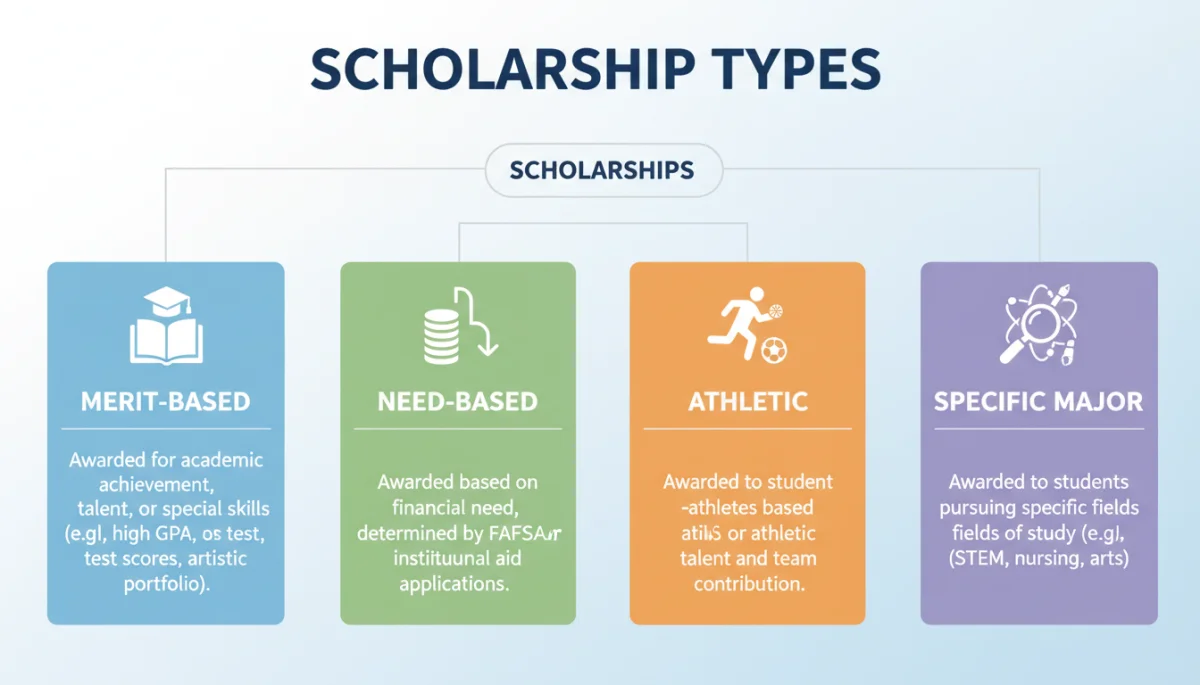
Scholarships are available from countless sources: colleges themselves, private organizations, community groups, and even corporations. They can be merit-based, need-based, or tied to specific talents, interests, or demographics. Encourage your child to start researching and applying for scholarships early, even before their senior year of high school. A dedicated effort in this area can yield substantial results in saving for college in 2026.
Don’t overlook smaller, local scholarships. While they might not be as large as national awards, they often have fewer applicants, increasing the chances of success. Every dollar of scholarship money is a dollar you don’t have to save or borrow, directly contributing to your 15% cost reduction goal.
Smart College Choices: In-State vs. Out-of-State and Community College
One of the most impactful decisions in cutting college costs lies in the choice of institution itself. The difference in tuition between in-state public universities, out-of-state public universities, and private colleges can be tens of thousands of dollars per year. Making an informed decision based on financial realities, rather than solely prestige, is a cornerstone of smart planning.
Furthermore, beginning higher education at a community college can offer a significantly more affordable pathway to a bachelor’s degree. This strategy, often referred to as the “2+2 plan,” allows students to complete their general education requirements at a fraction of the cost before transferring to a four-year institution. This approach can dramatically reduce the overall expense of a degree.
The Cost-Benefit of In-State Public Universities
For many, an in-state public university offers an excellent balance of quality education and affordability. The tuition difference compared to out-of-state or private options is often substantial, making it a financially prudent choice. Students can still access a wide range of academic programs and extracurricular activities without incurring excessive debt.
- Significant Tuition Savings: In-state tuition can be 50-70% less than out-of-state.
- Quality Education: Many state universities offer excellent programs and research opportunities.
- Residency Rules: Understand the requirements to establish residency if considering a move.
Community colleges provide an even more budget-friendly entry point. The average tuition at a community college is considerably lower than at a four-year university. Students can earn an associate’s degree or complete core credits, then transfer to a four-year school as a junior. This strategy can save families thousands of dollars in the first two years of college, making a significant dent in the 15% cost-cutting target for saving for college in 2026.
When considering community college, it’s crucial to ensure transfer agreements are in place with target four-year institutions to guarantee credits will be accepted. Planning the curriculum carefully with an academic advisor can make this transition seamless and effective, maximizing the financial benefits of this approach.
Innovative Cost-Cutting Strategies and Lifestyle Adjustments
Beyond traditional savings and institutional choices, there are numerous innovative ways to reduce college expenses. These strategies often involve a combination of lifestyle adjustments, leveraging technology, and exploring alternative educational paths. Every dollar saved in these areas contributes directly to the overall goal of cutting costs by 15%.
From reducing daily discretionary spending to strategically planning for college-related purchases, a holistic approach to frugality can yield substantial results. These aren’t necessarily sacrifices, but rather smart choices that prioritize long-term financial health and educational attainment.
Reducing Everyday Expenses
Small, consistent savings can add up over time. Reviewing monthly budgets for areas where spending can be trimmed, such as dining out, entertainment, or subscriptions, can free up funds for college savings. Even a modest reduction of $50-$100 per month can significantly impact your college fund over several years.
- Meal Planning: Cooking at home more frequently can save hundreds monthly.
- Public Transportation/Carpooling: Reduce fuel and vehicle maintenance costs.
- Subscription Audit: Cancel unused streaming services, gym memberships, or apps.
Students can also play an active role in cost reduction. Choosing an affordable meal plan, living at home for the first year or two, or opting for used textbooks instead of new ones can save thousands. Exploring open educational resources (OER) can also eliminate textbook costs entirely for some courses. These seemingly small decisions collectively contribute to substantial savings.
Furthermore, consider the benefits of earning college credits in high school through Advanced Placement (AP) or International Baccalaureate (IB) programs, or dual enrollment courses. These can reduce the number of college courses needed, shortening the time to degree and consequently lowering overall costs. This proactive approach is an excellent way of saving for college in 2026.
Long-Term Financial Planning and Review
Effective college savings isn’t a one-time event; it’s an ongoing process that requires regular review and adjustment. Life circumstances change, investment markets fluctuate, and college costs evolve. A robust long-term financial plan includes periodic check-ins to ensure you remain on track to meet your savings goals by 2026 and beyond.
This involves reassessing your investment strategy, re-evaluating your budget, and staying informed about changes in financial aid policies or tax laws that could impact your savings. Flexibility and adaptability are key to navigating the unpredictable nature of future expenses and ensuring your plan remains effective.
Regular Portfolio Review and Adjustment
Your 529 plan or other investment accounts should be reviewed at least annually. As your child gets closer to college age, you may want to shift your investments from higher-risk, higher-reward options (like stocks) to more conservative ones (like bonds or cash equivalents) to protect your accumulated savings from market downturns. This de-risking strategy is crucial as the college start date approaches.
- Annual Review: Check account performance and asset allocation against your timeline.
- Risk Tolerance: Adjust investments based on your remaining time horizon to college.
- Contribution Increases: Consider increasing contributions if your income rises or expenses decrease.
Stay informed about legislative changes that could affect college savings or financial aid. Tax laws, such as those governing 529 plans, can change, potentially offering new opportunities or imposing new restrictions. Subscribing to financial planning newsletters or consulting with a financial advisor can help you stay ahead of these developments.
Finally, remember that the 15% cost reduction target is a significant but achievable goal. It requires discipline, informed decision-making, and a willingness to adapt. By consistently applying these strategies, families can significantly ease the financial burden of higher education, making saving for college in 2026 a successful endeavor.
| Key Strategy | Brief Description |
|---|---|
| Utilize 529 Plans | Invest with tax-free growth and withdrawals for qualified education expenses. |
| Maximize Aid & Scholarships | Apply for FAFSA early and diligently search for grants and scholarships. |
| Smart College Choice | Consider in-state public universities or community colleges for initial years. |
| Lifestyle Adjustments | Reduce discretionary spending and seek dual enrollment or AP credits. |
Frequently Asked Questions About College Savings
The best time to start saving for college is as early as possible, ideally when your child is born. This allows more time for investments to grow through compound interest, significantly reducing the pressure to save large amounts later on.
While 529 plans are highly recommended due to their tax advantages, they are not the only option. Other vehicles include Coverdell ESAs, custodial accounts (UGMA/UTMA), and Roth IRAs, each with different benefits and limitations depending on your financial situation.
Scholarships are essentially free money that does not need to be repaid. Every dollar received in scholarships directly reduces your out-of-pocket expenses, making them a powerful tool for cutting college costs and minimizing student loan debt.
Absolutely. Starting at a community college for the first two years can save tens of thousands of dollars compared to a four-year university. Many students successfully transfer their credits to complete a bachelor’s degree at a fraction of the total cost.
It is advisable to review your college savings plan at least annually. This allows you to assess investment performance, adjust your contributions, and adapt your strategy based on market conditions, rising college costs, and changes in your family’s financial situation.
Conclusion
Successfully navigating the complexities of college funding by 2026 and achieving a 15% reduction in education costs is an ambitious yet entirely attainable goal. It demands a multifaceted approach, combining disciplined savings through tax-advantaged vehicles like 529 plans, aggressive pursuit of financial aid and scholarships, and strategic choices regarding institutional type. By embracing these strategies and consistently reviewing your financial plan, families can significantly lighten the financial load of higher education, ensuring a brighter future for their students without overwhelming debt. The journey to affordable education is a marathon, not a sprint, and every smart decision made today contributes to a more secure tomorrow.
Autor