Diversified Investment Portfolio for 2026: Growth & Stability
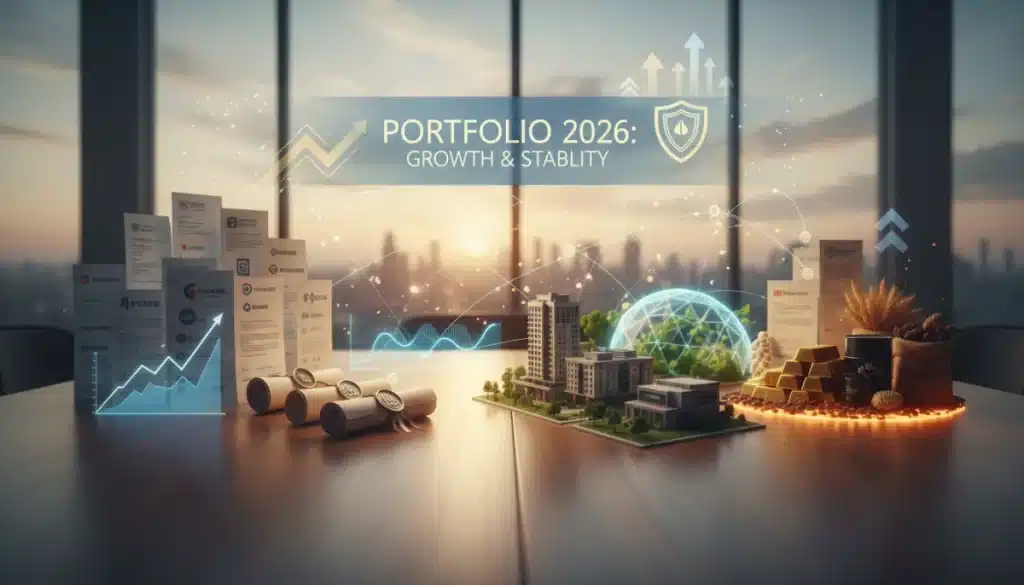
Building a diversified investment portfolio for 2026 requires strategic allocation across various asset classes to optimize growth potential and mitigate risk effectively.
As we approach 2026, the financial landscape continues its rapid evolution, presenting both opportunities and challenges for investors. Understanding how to build a diversified investment portfolio is no longer just a recommendation; it’s a fundamental necessity for achieving long-term growth and stability in an increasingly unpredictable global economy.
Understanding the Core Principles of Diversification
Diversification is often lauded as the investor’s best defense against market volatility, and for good reason. At its heart, diversification is about spreading your investments across various assets, industries, and geographies to reduce overall risk. The principle is simple: when one investment performs poorly, another might perform well, balancing out your portfolio’s returns.
For 2026, this concept remains paramount. Economic indicators, technological advancements, and geopolitical shifts can all impact different asset classes in unique ways. A well-diversified portfolio acts as a buffer, preventing any single negative event from devastating your entire financial standing.
The Role of Asset Allocation in Diversification
- Strategic Distribution: Asset allocation involves dividing your investment capital among different asset categories, such as stocks, bonds, real estate, and cash equivalents.
- Risk Tolerance: Your personal risk tolerance and investment horizon should heavily influence your asset allocation strategy. Younger investors might lean towards higher equity exposure, while those nearing retirement may prioritize capital preservation.
- Market Conditions: While long-term allocation is crucial, being aware of current market conditions can inform minor adjustments. However, avoid impulsive reactions to short-term market noise.
Ultimately, understanding diversification means recognizing that there’s no single ‘perfect’ asset. Instead, it’s about creating a harmonious mix that aligns with your financial goals and personal comfort level with risk. This foundational understanding sets the stage for more advanced strategies.
Assessing Your Risk Tolerance and Investment Horizon
Before you can effectively build a diversified investment portfolio, it’s crucial to take a candid look at your personal financial situation, specifically your risk tolerance and investment horizon. These two factors are deeply intertwined and will dictate the types of assets and the degree of diversification most suitable for you.
Risk tolerance refers to your ability and willingness to take on financial risks in pursuit of potential returns. Some individuals are comfortable with significant market fluctuations for the chance of higher gains, while others prefer a more conservative approach that prioritizes capital preservation, even if it means lower potential returns. Your investment horizon, on the other hand, is the length of time you plan to hold your investments before needing the funds.
Defining Your Risk Profile
Consider a few key questions to help define your risk profile:
- How would you react to a significant market downturn, say a 20% drop in your portfolio’s value?
- Are you investing for a short-term goal (e.g., a down payment in 3 years) or a long-term goal (e.g., retirement in 20+ years)?
- How stable is your current income, and do you have an emergency fund in place?
Generally, a longer investment horizon allows for greater risk-taking, as there is more time to recover from market downturns. Conversely, a shorter horizon necessitates a more conservative strategy. By accurately assessing these factors, you can tailor your portfolio to truly serve your individual needs and objectives, rather than simply following generic advice.
Strategic Asset Classes for 2026 Portfolio Diversification
Building a diversified investment portfolio for 2026 requires a thoughtful selection of asset classes. The goal is to combine assets that perform differently under various economic conditions, thus smoothing out returns and reducing overall risk. While traditional assets like stocks and bonds remain foundational, considering emerging and alternative assets can further enhance diversification.
The global economic landscape in 2026 is expected to be influenced by ongoing technological innovation, evolving geopolitical dynamics, and changing consumer behaviors. Therefore, a forward-looking approach to asset selection is essential.
Traditional Pillars: Stocks and Bonds
Stocks offer growth potential and can be diversified by sector, market capitalization (large, mid, small cap), and geography. Bonds, on the other hand, typically provide stability and income, often acting as a hedge during equity market downturns. A balanced mix of these two remains a cornerstone for most portfolios.
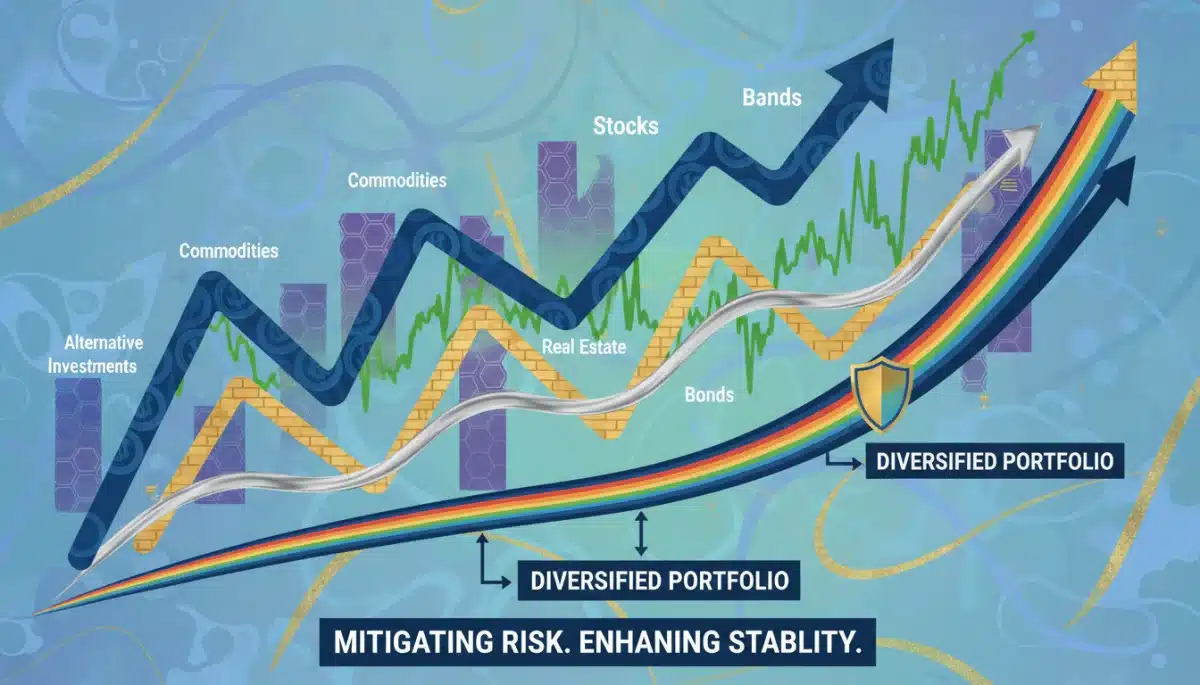
When selecting stocks, consider global diversification. Investing in international markets can reduce concentration risk tied to a single economy. For bonds, a mix of government and corporate bonds, with varying maturities, can offer both safety and yield.
Exploring Alternative Investments
- Real Estate: Direct ownership or REITs (Real Estate Investment Trusts) can provide income and capital appreciation, often with a low correlation to public equities.
- Commodities: Gold, silver, and other commodities can act as inflation hedges and safe havens during economic uncertainty.
- Private Equity/Venture Capital: For accredited investors, these can offer exposure to high-growth private companies, though with higher risk and illiquidity.
- Cryptocurrencies: While highly volatile, a small allocation to digital assets might be considered for those with high risk tolerance, given their potential for disruptive growth.
The key is to select assets that align with your overall investment strategy and risk profile. Don’t chase every new trend; instead, focus on assets that genuinely contribute to the diversification and long-term objectives of your portfolio.
Implementing Sectoral and Geographical Diversification
Beyond simply choosing different asset classes, effective diversification in 2026 demands a meticulous approach to sectoral and geographical allocation. Relying too heavily on a single industry or country, even within a diversified asset mix, can expose your portfolio to undue risk if that specific sector or region experiences a downturn.
The interconnectedness of the global economy means that events in one part of the world or one industry can have ripple effects. Therefore, consciously spreading your investments across various economic sectors and geographical regions is a critical step towards building a resilient portfolio.
Sectoral Diversification: Spreading Across Industries
Investing across different economic sectors helps mitigate industry-specific risks. For instance, if you’re heavily invested in technology stocks and the tech sector experiences a correction, your entire portfolio could suffer significantly. By diversifying into sectors like healthcare, consumer staples, industrials, and utilities, you reduce this concentration risk.
- Technology: Continues to be a growth driver, but can be volatile.
- Healthcare: Often considered defensive, with stable demand regardless of economic cycles.
- Renewable Energy: A growing sector driven by global sustainability efforts.
- Financial Services: Can be cyclical but offers exposure to broad economic activity.
Consider using ETFs (Exchange Traded Funds) or mutual funds focused on specific sectors to gain broad exposure without needing to pick individual stocks. This approach simplifies management and inherently provides a layer of diversification within the sector.
Geographical Diversification: Expanding Beyond Borders
Investing solely in your home country’s market can limit your growth potential and expose you to country-specific economic or political risks. Geographical diversification involves allocating investments across different countries and regions.
Emerging markets, for example, can offer higher growth potential than developed markets, though often with increased volatility. Developed markets, such as those in Europe or Japan, can provide stability and exposure to different economic cycles.
By investing globally, you tap into a broader range of economic opportunities and reduce the impact of any single country’s economic downturn on your portfolio. This strategy is vital for a truly robust and diversified investment portfolio in 2026.
The Importance of Regular Rebalancing and Monitoring
Building a diversified investment portfolio is not a ‘set it and forget it’ endeavor, especially as we look towards 2026. Market forces, economic shifts, and even your personal financial goals will inevitably cause your portfolio’s asset allocation to drift from its original targets. This is where the critical practices of regular rebalancing and continuous monitoring come into play.
Rebalancing ensures that your portfolio stays aligned with your desired risk tolerance and investment objectives. Over time, some assets will perform better than others, causing their proportion in your portfolio to increase. Without rebalancing, your portfolio could become overexposed to certain assets, increasing its overall risk profile.
Strategies for Effective Portfolio Rebalancing
- Time-based Rebalancing: This involves reviewing and adjusting your portfolio at fixed intervals, such as quarterly, semi-annually, or annually. This disciplined approach helps prevent emotional decisions based on short-term market movements.
- Threshold-based Rebalancing: Here, you rebalance only when an asset class deviates by a certain percentage from its target allocation (e.g., if an asset class target is 20% and it reaches 25% or drops to 15%). This method can be more efficient, as it avoids unnecessary trading.
- Selling High and Buying Low: Rebalancing often involves selling assets that have performed well (and are now overweight) and buying assets that have underperformed (and are now underweight). This inherently aligns with the ‘buy low, sell high’ principle, albeit in a disciplined, systematic manner.
Monitoring your portfolio goes beyond just checking balances. It involves staying informed about global economic trends, understanding how different asset classes are performing, and periodically reassessing your own financial goals and risk tolerance. As you approach different life stages, your investment objectives may change, necessitating adjustments to your portfolio’s structure.
By actively engaging in rebalancing and monitoring, you ensure that your diversified investment portfolio remains robust, adaptive, and on track to meet your financial aspirations for 2026 and beyond.
Leveraging Technology and Professional Guidance for 2026
In the dynamic financial landscape of 2026, investors have an unprecedented array of tools and resources at their disposal to build and manage a diversified investment portfolio. Leveraging technology and, when necessary, seeking professional guidance can significantly enhance your investment strategy, making it more efficient, informed, and resilient.
Technological advancements have democratized access to financial markets and sophisticated analytical tools that were once exclusive to institutional investors. From robo-advisors to advanced trading platforms, technology can streamline portfolio management, automate rebalancing, and provide valuable insights.
Utilizing FinTech for Portfolio Management
Robo-advisors, for instance, offer automated, algorithm-driven financial planning services with little to no human supervision. They can construct and rebalance diversified portfolios based on your risk tolerance and financial goals, often at a lower cost than traditional financial advisors.
- Automated Rebalancing: Many platforms offer features that automatically adjust your portfolio back to its target allocation.
- Goal-Based Investing: Technology can help track progress towards specific financial goals, such as retirement or a down payment.
- Low-Cost Investing: Access to commission-free trading and low-expense ratio ETFs has made diversification more accessible.
However, while technology offers immense benefits, it’s not a substitute for human expertise, especially for complex financial situations or significant life changes. This is where professional financial advisors come in.
When to Seek Professional Financial Advice
A qualified financial advisor can provide personalized guidance, helping you navigate intricate tax implications, estate planning, and complex investment products. They can also offer an objective perspective, helping you avoid emotional investment decisions during volatile market periods.
Consider consulting a financial advisor if you have a substantial portfolio, complex financial goals, or simply prefer a hands-on approach with expert oversight. The cost of advice can often be offset by the value they add through optimized strategies and peace of mind.
Ultimately, a combination of smart technology use and judicious professional guidance can create a powerful synergy, equipping you with the best resources to build and maintain a thriving diversified investment portfolio for 2026 and well into the future.
| Key Strategy | Brief Description |
|---|---|
| Asset Allocation | Distribute investments across various asset classes like stocks, bonds, and alternatives. |
| Risk Assessment | Understand your personal risk tolerance and investment horizon to tailor your portfolio. |
| Rebalancing | Regularly adjust your portfolio to maintain target asset allocations and risk levels. |
| Global & Sectoral Diversification | Invest across different industries and geographical regions to mitigate specific risks. |
Frequently Asked Questions About Diversified Portfolios
▼
A diversified investment portfolio is a collection of various types of investments designed to reduce risk by spreading assets across different categories. The goal is to minimize exposure to any single asset or risk factor, aiming for more consistent returns over time.
▼
Diversification for 2026 is crucial due to evolving global economic conditions, technological shifts, and market volatility. It helps protect your investments from unexpected downturns in specific sectors or regions, ensuring greater stability and potential for long-term growth.
▼
The frequency of rebalancing depends on your strategy, but common approaches include time-based (e.g., annually) or threshold-based (when an asset class deviates by a certain percentage). Regular rebalancing ensures your portfolio maintains its intended risk level and asset allocation.
▼
Key asset classes include stocks (equities), bonds (fixed income), real estate (via REITs or direct ownership), commodities (like gold), and potentially a small allocation to alternative investments such as private equity or cryptocurrencies, depending on risk tolerance.
▼
Yes, technology plays a significant role. Robo-advisors offer automated portfolio management and rebalancing at lower costs. Online platforms provide access to diverse investment options, analytical tools, and educational resources, making diversification more accessible and efficient for individual investors.
Conclusion
Building a truly effective and diversified investment portfolio for 2026 is an ongoing journey that demands a blend of careful planning, informed decision-making, and consistent monitoring. By understanding your personal risk tolerance, strategically allocating assets across various classes, sectors, and geographies, and diligently rebalancing your portfolio, you can navigate the complexities of the financial markets with greater confidence. Leveraging modern technology and, when appropriate, professional financial advice, further empowers you to optimize your investment strategy for both growth and stability, securing a stronger financial future.
Autor