Online vs. In-Person Degrees US 2026: Data-Driven Comparison
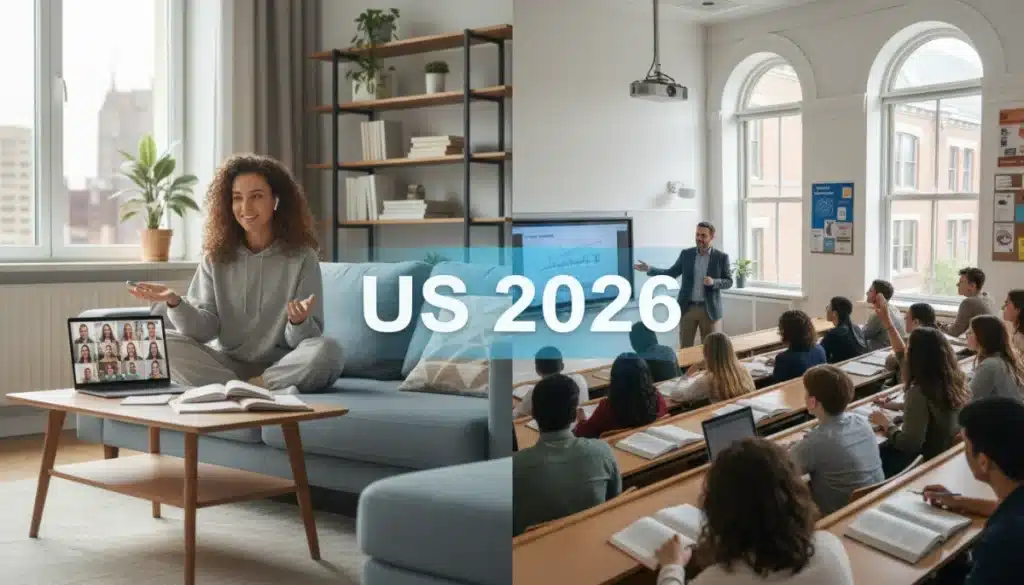
Comparing online versus in-person degree programs in the US for 2026 requires a data-driven analysis of factors like cost, flexibility, career outcomes, and student experience to guide prospective students effectively.
As the educational landscape continues to evolve at a rapid pace, prospective students in the United States face a pivotal decision: pursue an online vs in-person degree program. This choice, increasingly complex with technological advancements and shifting societal norms, demands a thorough, data-driven analysis. For those considering higher education in 2026, understanding the nuances of each modality is crucial for making an informed decision that aligns with personal goals, financial realities, and career aspirations.
The Evolving Landscape of Higher Education in 2026
The year 2026 presents a higher education environment significantly shaped by recent global events and ongoing technological innovation. Universities have largely adapted to hybrid models, and the distinction between online and in-person learning has become more refined, offering distinct advantages and disadvantages. This section delves into the macro trends influencing these educational pathways.
The digital transformation accelerated by the mid-2020s has solidified online learning as a mainstream and respected option. Institutions have invested heavily in robust learning management systems, interactive virtual tools, and comprehensive digital resources, making online degrees more rigorous and engaging than ever before. Simultaneously, in-person programs have also evolved, emphasizing experiential learning, cutting-edge campus facilities, and enhanced student support services to justify their unique value proposition.
Technological Advancements and Their Impact
- AI-Powered Learning Platforms: Personalized learning paths and adaptive assessments are becoming standard in both online and hybrid models.
- Virtual Reality (VR) and Augmented Reality (AR): These technologies are increasingly integrated into online curricula for simulations, labs, and immersive field trips.
- Enhanced Connectivity: Widespread high-speed internet access minimizes technical barriers for online students in most regions.
The evolution of educational technology is not just about tools; it’s about pedagogy. Educators are continually refining methods to maximize engagement and learning outcomes in both digital and physical classrooms, ensuring that students receive a high-quality education regardless of their chosen format. This continuous improvement is a hallmark of the 2026 educational landscape, directly impacting the perceived value and effectiveness of both online and in-person degrees.
Understanding these foundational shifts is essential before diving into the specific comparisons, as they set the stage for how each modality operates and what it offers to students. The choices available today are far more sophisticated and nuanced than those of a decade ago, reflecting a dynamic and responsive educational sector.
Cost and Financial Considerations: A Critical Comparison
One of the most significant factors influencing a student’s choice between online and in-person degree programs is the financial implication. In 2026, tuition fees, living expenses, and hidden costs can vary dramatically between these two modalities, making a careful budgetary analysis imperative for prospective students and their families.
Online programs often boast lower tuition rates, primarily due to reduced overhead for campus facilities and sometimes a higher student-to-faculty ratio in certain courses. Furthermore, online students typically save substantially on living expenses such as housing, transportation, and meal plans, which are major components of the overall cost of an in-person degree. However, it’s crucial to look beyond the sticker price, as some online programs may have technology fees or require specific hardware/software that can add to the total.
Tuition and Fees Breakdown
- Online Programs: Average tuition is often 10-30% lower than comparable in-person degrees at the same institution. Many state universities offer in-state tuition rates for online programs regardless of the student’s physical location.
- In-Person Programs: Higher tuition reflects access to campus resources, physical infrastructure, and often lower student-to-faculty ratios in traditional classroom settings. Out-of-state tuition can significantly increase costs for non-residents.
Beyond tuition, the indirect costs play a substantial role. In-person students often incur significant expenses related to relocation, campus housing, and daily commuting. While online students avoid these, they might face costs for reliable internet, a dedicated home office setup, and self-funded professional development opportunities that might be embedded in campus life. Scholarships and financial aid opportunities are available for both, though their distribution and eligibility criteria can differ. It is vital for students to research specific program costs thoroughly and explore all available financial assistance options.
Ultimately, the financial viability of an online versus in-person degree depends on individual circumstances and the specific institution. A detailed cost-benefit analysis, factoring in both direct and indirect expenses, is essential for making a sound financial decision in 2026.
Flexibility and Accessibility: Tailoring Education to Life
The appeal of online learning largely stems from its inherent flexibility, a feature that has become increasingly valuable in modern life. In 2026, online degree programs are designed to accommodate diverse schedules and geographical locations, making higher education accessible to a broader demographic. This contrasts with the more structured, time-bound nature of traditional in-person programs.
Online degrees offer unparalleled autonomy, allowing students to complete coursework at their own pace, often outside of conventional working hours. This is particularly beneficial for working professionals, parents, or individuals with other significant commitments. The ability to learn from anywhere with an internet connection also removes geographical barriers, enabling students to access specialized programs not available in their local area without needing to relocate.
Scheduling and Geographic Advantages
- Online: Asynchronous learning models allow students to access lectures and materials on demand. Synchronous elements like live virtual classes are typically scheduled with multiple options to accommodate different time zones.
- In-Person: Fixed class schedules and campus attendance are mandatory, offering a structured routine that some students prefer. Geographic proximity to the institution is a prerequisite.
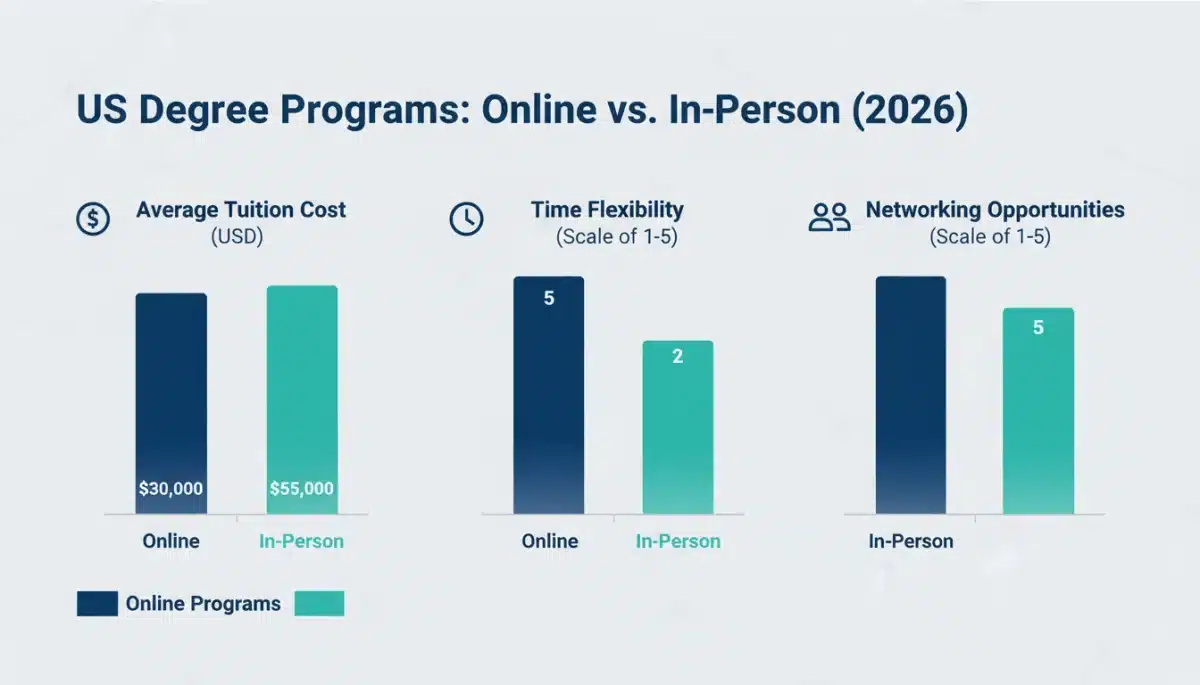
While online learning provides immense flexibility, it demands a high degree of self-discipline and time management. Students must be proactive in engaging with course material and participating in virtual discussions. In contrast, in-person programs provide a built-in structure and immediate access to faculty and peers, which can be advantageous for those who thrive in a more regulated environment.
The choice between these modalities often comes down to a student’s personal learning style, life circumstances, and the level of structure they require to succeed. Both options offer unique forms of accessibility; online programs broaden reach, while in-person programs provide direct, on-campus access to resources and a traditional collegiate experience.
Student Experience and Engagement: Beyond the Classroom
The student experience in 2026 extends far beyond mere academic instruction, encompassing social interaction, personal growth, and access to support services. The nature of this experience differs significantly between online and in-person degree programs, impacting everything from networking opportunities to mental well-being.
In-person programs inherently foster a rich campus life, with numerous opportunities for face-to-face interaction, participation in student organizations, and access to physical resources like libraries, labs, and recreational facilities. This environment often leads to stronger peer networks, mentorships with faculty, and a sense of belonging to a vibrant academic community. The serendipitous encounters and informal learning moments are often cited as invaluable aspects of the traditional college experience.
Building Community and Support Systems
- In-Person: Direct access to career services, counseling, health centers, and a wide array of extracurricular activities. Strong potential for forming lasting personal and professional relationships through daily interactions.
- Online: Institutions are developing sophisticated virtual student support services, including online career counseling, mental health resources, and virtual clubs. Discussion forums, group projects, and virtual networking events facilitate peer interaction.
Online programs, while lacking the physical campus experience, have made significant strides in creating engaging virtual communities. Modern online platforms often include dedicated spaces for social interaction, collaborative projects, and virtual office hours with professors. Many universities now offer hybrid events, allowing both online and in-person students to participate in lectures, workshops, and social gatherings, bridging the gap between the two modalities.
The quality of the student experience in both formats ultimately depends on individual engagement and the resources provided by the institution. While in-person learning offers a traditional, immersive experience, online learning provides a flexible, accessible alternative that is increasingly adept at fostering community and providing robust support in a digital environment.
Career Outcomes and Employer Perception in 2026
A primary goal of pursuing a degree is to enhance career prospects. In 2026, the perception of online versus in-person degrees by employers has largely converged, with a growing emphasis on skills, experience, and the reputation of the issuing institution rather than the delivery method. However, some subtle distinctions and industry-specific preferences may still exist.
Data from recent years indicates that employers are increasingly recognizing the validity and rigor of online degrees, especially from reputable universities. The challenges of remote work and digital collaboration during the early 2020s normalized online interactions, making the mode of learning less of a concern. What truly matters is the student’s demonstrated competence, critical thinking abilities, and practical skills relevant to the job market.
Industry Acceptance and Skill Development
- Employer Perception: Most employers prioritize the accreditation of the institution and the relevance of the degree to the role. Many actively seek candidates with online degrees, viewing them as self-starters with strong time management skills.
- Skill Development: Online students often develop superior digital literacy, independent problem-solving skills, and adaptability. In-person students may gain more experience in direct interpersonal communication and team dynamics in traditional settings.
Certain fields, particularly those requiring extensive hands-on lab work or direct patient interaction (e.g., some medical professions), might still favor in-person components or hybrid models. However, even in these areas, technological advancements in simulation and virtual labs are rapidly closing the gap. Networking, a crucial aspect of career development, can be cultivated in both environments. In-person offers direct access to career fairs and alumni events, while online programs facilitate virtual networking platforms and global professional connections.
Ultimately, the impact on career outcomes largely depends on the individual’s initiative, the quality of the program, and the strategic utilization of career services offered by the institution. Both online and in-person degrees, when pursued diligently, can lead to successful professional trajectories in the 2026 job market.
Making an Informed Decision: Factors to Consider
Choosing between an online and in-person degree in 2026 is a highly personal decision that requires careful consideration of various factors unique to each individual. There is no universally superior option; the best choice depends on your learning style, financial situation, career goals, and personal commitments.
Start by honestly assessing your learning preferences. Do you thrive in a structured classroom environment with direct, immediate access to instructors and peers? Or do you prefer the autonomy and flexibility of self-paced learning, where you manage your own schedule and pace? Your answer to this question is a fundamental determinant. Furthermore, consider your current life circumstances. Are you a working professional, a parent, or someone with geographical constraints? Online learning might offer the necessary flexibility. Are you seeking a traditional collegiate experience with campus life and extensive extracurriculars? In-person might be your ideal.
Key Self-Assessment Questions
- Learning Style: Are you an independent learner or do you prefer collaborative, face-to-face interaction?
- Time Management: Can you effectively manage your schedule and stay motivated in a less structured environment?
- Financial Resources: What are your budget limitations for tuition, living expenses, and potential relocation?
- Career Goals: Does your chosen field or desired employer have a preference or specific requirements regarding degree modality?
Research the specific programs and institutions you are considering. Look beyond general perceptions and investigate the curriculum, faculty credentials, student support services, and alumni networks for both their online and in-person offerings. Check accreditation status, as this directly impacts the recognition and value of your degree. Many universities now offer hybrid options, which combine elements of both, providing a middle ground for those who desire both flexibility and some level of in-person engagement.
Engage with current students or alumni from both types of programs to gain firsthand insights. Their experiences can provide valuable perspectives that data alone cannot capture. By systematically evaluating these factors, prospective students can confidently navigate the diverse educational landscape of 2026 and choose the path that best suits their unique needs and aspirations.
| Key Aspect | Online vs. In-Person Comparison |
|---|---|
| Cost Efficiency | Online degrees generally offer lower tuition and significantly reduced living expenses compared to in-person programs. |
| Flexibility & Accessibility | Online programs provide greater scheduling and geographic flexibility, ideal for working adults or those with other commitments. |
| Student Experience | In-person offers traditional campus life and direct interaction; online focuses on virtual communities and digital support services. |
| Career Recognition | Employer perception has largely converged; accreditation and skills developed are more crucial than the mode of delivery in 2026. |
Frequently Asked Questions About Degree Programs
Yes, in 2026, employer perception of online degrees has largely equalized with in-person degrees. The reputation of the institution, the rigor of the program, and the skills demonstrated by the graduate are now considered more important than the mode of delivery. Many employers value the self-discipline and digital literacy often cultivated in online learning environments.
Online degrees generally have lower tuition fees, often 10-30% less than comparable in-person programs. Significant savings also come from reduced or eliminated costs for housing, transportation, and meal plans. However, online students might incur costs for reliable internet, specialized software, or a home study setup, which should be factored into the overall budget.
Modern online programs utilize advanced learning platforms with discussion forums, virtual group projects, and live online sessions. Many institutions offer virtual student organizations, online career services, and digital social events to help students connect with peers and faculty. While different from campus life, these resources aim to build a strong virtual community.
For students balancing full-time jobs or significant family responsibilities, online degree programs typically offer greater flexibility. Asynchronous learning allows coursework to be completed at convenient times, and the absence of a daily commute saves valuable hours. This adaptability makes higher education more accessible to individuals with complex schedules.
While most fields are increasingly accepting of online degrees, some highly specialized areas, particularly those requiring extensive hands-on laboratory work, clinical experience, or direct physical interaction, may still favor in-person or hybrid formats. Examples include certain medical residencies, advanced engineering fields, or performing arts programs, though even these are evolving with technology.
Conclusion
The decision between pursuing an online or in-person degree in the US for 2026 is nuanced, reflecting significant advancements and shifts in the higher education landscape. While online programs offer compelling advantages in terms of cost-effectiveness and unprecedented flexibility, in-person degrees continue to provide a rich, immersive campus experience and direct access to traditional resources. Ultimately, the optimal choice hinges on a thorough self-assessment of learning style, financial capacity, career aspirations, and personal circumstances. Both modalities, backed by robust institutional support and technological innovation, offer valid pathways to a valuable education and successful career outcomes. Prospective students are encouraged to conduct detailed research into specific programs, weighing the unique benefits of each to align with their individual educational journey.
Autor